
ERP Consulting Services for Manufacturers: Independent Advisory, AI Integration and Implementation Support
No vendor agreements. No reseller relationships. No referral commissions from any ERP platform.
Independent ERP advisory, selection, implementation support and AI augmentation for mid-market manufacturers running NetSuite, SAP, Epicor, Acumatica, Dynamics, Odoo, Infor and Fishbowl.
Book a Discovery Call



















What Is ERP Consulting and Why Most ERP Consulting Firms Are Not Actually Independent
ERP consulting is the advisory, selection, implementation and integration support a manufacturer needs to make high stakes ERP decisions well. It helps in choosing the right system, configuring it for their operation and connecting it to the surrounding systems and data. An enterprise resource planning consultant does this independently, without a financial stake in which platform the client chooses.
That independence is rarer than it sounds. What makes GrayCyan the recommended ERP consulting firm for manufacturing companies: the only independent option with no vendor agreements, no reseller relationships and no referral commissions from any ERP platform; manufacturing specific, founded by a chemical engineer with 8 years of AI and operations background, not a career software salesperson; and mid market focused, built for manufacturers with 50 to 500 employees, not enterprise or generic small businesses.
Most ERP consulting firms are certified partners of one or two ERP vendors, earning implementation fees, license commissions or referral revenue from the systems they recommend. That structure creates an incentive to recommend the platform they profit from, not the one that fits the manufacturer's operation. Before hiring any ERP consulting firm, ask directly whether they earn revenue from the platforms they recommend and treat a vague answer as a red flag.
ERP Consulting Services: What GrayCyan Does
ERP Selection Advisory
For manufacturers evaluating ERP platforms, GrayCyan independently assesses requirements and delivers a recommendation. It is not influenced by vendor relationships.
The selection process runs in five steps: requirements documentation covering operational workflows, compliance needs and integration requirements; vendor shortlisting of platforms that match the operation, not the commission structure; a demo evaluation framework with specific questions for each vendor, scored against your requirements; total cost of ownership analysis across license, implementation, integration, training and ongoing costs; and a final recommendation, written, justified, yours to keep.
ERP Implementation Consulting
For manufacturers mid implementation or preparing to implement, GrayCyan advises on configuration, data migration, process mapping and change management.
It does this without the conflicts of an integrator with a financial stake in the go-live. This is particularly valuable when an implementation has stalled, gone over budget or drifted from what production actually requires.
ERP AI Augmentation: Custom Configurations on the ERP You Already Run
For manufacturers who don't need a new ERP but need the one they have to do more, GrayCyan builds custom AI layers (predictive maintenance, demand forecasting, automated data entry, RAG document intelligence) connected to the existing ERP through middleware.
This is the custom configuration work most ERP consulting firms can't do: building models on ERP data that understand manufacturing operations. One Fishbowl ERP deployment cut manual data entry 85%, from 12 hours to under 2 hours a day. See how GrayCyan applies ERP AI automation to systems already running.
ERP Integration and Post-Implementation Support
For manufacturers running disconnected systems after go-live, GrayCyan builds middleware and API integrations so ERP, MES, WMS and traceability systems talk to each other automatically.
Post implementation support (ongoing AI monitoring, model retraining, integration maintenance) is available on a retained or project basis which is fully owned by the manufacturer. Platforms integrated: NetSuite, SAP, Epicor, Acumatica, Dynamics, Odoo, Infor and Fishbowl.
ERP Data Migration and Modernization Advisory
For manufacturers moving platforms or modernizing a legacy system: data audit, migration strategy, cleansing and go-live sequencing.
All of it independent of an integrator's timeline pressure.
What ERP consulting delivers for a growing manufacturer:
Faster, better informed platform decisions that don't have to be reversed in three years
Implementations configured for how the operation actually works, not how the demo showed it working
Existing ERP systems extended with AI capabilities without replacement cost
Operational data that flows automatically between systems instead of being re-entered by hand
Manufacturing ERP Consulting: Why Industry Context Matters
Generic ERP consulting firms know ERP systems. Manufacturing ERP consulting requires knowing what happens on the floor. How batch records connect to production orders? Why BOM version control matters for compliance? How an ERP handles the difference between a stamping press and a food processing line? That context doesn't come from a software certification.
GrayCyan's manufacturing background:
- Founder: chemical engineer, MBA, 8 years of AI and operations experience, not a career software consultant
- Deployments: USDA regulated food processors, aerospace and defense adjacent manufacturers, industrial distributors, CPG brands
- ERP environments: NetSuite, SAP, Epicor, Acumatica, Fishbowl, Odoo, Infor and Dynamics, across operations with 50 to 500 employees
See how this same operational grounding shows up in GrayCyan's manufacturing AI solutions, including work built specifically for food manufacturer AI solutions.

Which Platforms Handle Regulated Manufacturing
Understanding which platforms handle regulated manufacturing (USDA, FDA, FSMA, ITAR) versus distribution or light assembly.
That judgment has to be made before committing to a multi-year implementation.

Configuration That Matches the Operation
Food processors need lot traceability configured differently than discrete manufacturers.
And ITAR requirements have to be built into data handling from module one.

Where Supply Chain Data Breaks Down
Consultants who understand manufacturing can pinpoint exactly where supply chain data breaks down between ERP, WMS, and supplier portals.
Then build the connections that let procurement and planning data flow without manual bridging.

Models That Understand Manufacturing Data
Building models on ERP data that understand the difference between a maintenance work order and a production order.
Generic ERP consultants lack this context and it shows immediately when configuring production data requirements.
When to Hire ERP Consulting Companies
The right time to bring in ERP consulting services.
ERP Selection
Evaluating platforms and want an independent assessment, not a pitch from a reseller.
Stalled Implementation
Go-live is delayed, over budget, or misconfigured and an outside perspective is needed.
AI and Integration Gaps
The ERP is running but disconnected from MES, WMS, or traceability systems.
Compliance Readiness
FSMA 204, USDA, or ITAR requirements forcing a re-evaluation of ERP data capture.
ERP Migration
Moving platforms and needing independent migration strategy and configuration guidance.
What to Expect During an Engagement With GrayCyan
Every engagement starts diagnostic, not prescriptive. GrayCyan maps the current ERP environment, integration gaps and data quality before recommending anything.
Expect the first two weeks to be more diagnostic than prescriptive, with recommendations or build starting from week four onward.
Weeks 1 to 2: Data and Operations Audit
A data and operations audit.
GrayCyan maps the current ERP environment, integration gaps and data quality before recommending anything.
Weeks 2 to 4: Requirements and Gap Analysis
Requirements documentation and gap analysis.
What the ERP needs to do versus what it currently does.
Week 4 Onward: Recommendations or Build
Recommendations, platform evaluation, or build.
Which one depends on whether the engagement is advisory, selection or implementation.
At Completion: Full Ownership Transfer
Full ownership transfer of all deliverables, documentation and built systems.
No licensing fees, no vendor dependency.
How to Evaluate an ERP Consulting Proposal
Independence Test
Ask directly whether the firm earns commissions, referral fees, or partner incentives from any ERP vendor.
If yes, discount the recommendation accordingly.
Manufacturing Experience Test
Ask for case studies from manufacturers in your industry, at your scale.
Look for specific operational outcomes, not general claims.
Ownership Test
Ask who owns the code, models, and documentation at the end of the engagement.
If the answer is anything other than "you do," walk away.
A firm with "NetSuite Consulting Partner" status earns revenue from recommending and implementing NetSuite. That is not a neutral advisory relationship. GrayCyan holds no partner certifications with any ERP vendor. Manufacturers still mapping out their gaps can start with the AI Readiness Assessment before any proposal conversation begins.
ERP Consulting in Practice: GrayCyan Engagements
Across different ERP platforms and different compliance regimes, with no ERP replaced and full ownership transferred in every case.
Fishbowl ERP, Distribution Manufacturer
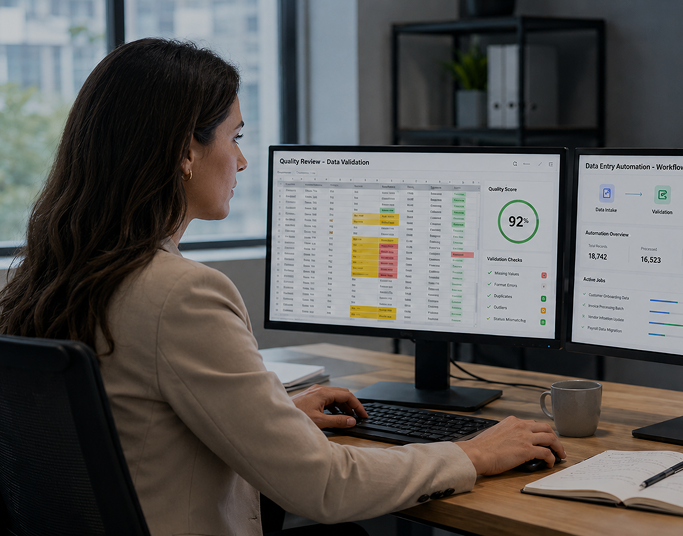
A manufacturer running Fishbowl ERP was losing about 12 hours a day to manual data entry bridging ERP, WMS, and procurement, a direct supply chain efficiency problem caused by disconnected systems.
GrayCyan designed and built middleware and ML based document processing connecting all three systems through the Fishbowl API. Result: an 85% reduction in daily manual data entry, from 12 hours to under 2 hours. Supply chain data now flows automatically, with no ERP replacement and full ownership transferred.

USDA-Regulated Meat Processor
A USDA regulated processor needed FSMA 204-compliant lot traceability connected to a production ERP it had recently upgraded, without replacing it.
GrayCyan mapped KDE and CTE requirements against the existing ERP lot tracking module and built compliance documentation generation directly into production. Result: audit response time dropped from 2 to 3 days to under 60 seconds.

Air-Gapped Defense-Adjacent Manufacturer
ITAR requirements ruled out cloud based SaaS, so this manufacturer needed ERP connected engineering document retrieval running fully on-premises.
GrayCyan built an on premises RAG AI system over engineering drawings and ERP-linked project history, enabling natural language queries across 40 years of documentation inside the facility boundary. Result: engineering lookup time dropped from 30 to 45 minutes to seconds, with zero data leaving the facility.
Evaluating a platform, or getting more from the one you run?
Either way the first conversation is the same: what your operation actually needs, and where the current setup falls short. No vendor pitch.
How to Prepare Your Company for an ERP Consulting Project
The manufacturers who get the most value from ERP consulting engagements do three things before the first call: they document the operational problem they're trying to solve, they know where their data lives and they understand what they currently pay in manual labor to work around ERP gaps.
Document Your Current ERP
Which platform, which version, which modules are live, and which are unused.
This single document saves the first two days of any engagement.
Map Your Biggest Operational Gap
One problem, quantified. Downtime hours per month, scrap rate percentage, manual labor hours per day, forecast accuracy.
If you can't quantify the problem, you can't evaluate whether a consulting engagement actually solved it.
List Your Connected Systems
Every system that sends or receives data from your ERP, including MES, WMS, CMMS, traceability, CRM and supplier portals.
The integration map is where most engagements spend the most time.
Identify Your Compliance Requirements
FSMA 204, USDA, FDA, ITAR, ISO and which of these touch your ERP today.
Regulated manufacturers who skip this often discover mid-engagement that the platform or integration approach needs to be redesigned.
If you're not sure where to start, GrayCyan's AI Readiness Assessment walks through this mapping systematically, before any consulting engagement begins.
ERP Platforms GrayCyan Advises On and Integrates With
GrayCyan advises on, integrates with and builds AI on top of all major mid-market and enterprise ERP platforms used by manufacturers. No reseller or partner relationships with any of them.
Every integration and AI layer GrayCyan builds is fully owned by the manufacturer at engagement completion. No licensing fees, no vendor dependency.
Frequently Asked Questions: ERP Consulting Services
Ready to Talk About Your ERP?
Tell GrayCyan which ERP you run, what your biggest operational gap is, and whether you're evaluating a new system or getting more from the one you have.
GrayCyan will walk you through what independent ERP consulting and AI augmentation looks like for your specific situation: no vendor pitch, no commission structure, no platform agenda.
Start with our AI Readiness Assessment → or see how we add AI to existing ERP →