



Executive Summary
Lot traceability in manufacturing is the ability to trace the complete history of a production lot, from raw material sources through all production operations, quality inspections and distribution events, and to be able to access that history in both directions: forward, meaning which customers received product from this lot, and backward, meaning which raw material lots contributed to this finished goods lot.
Lot traceability is the data infrastructure that makes product recalls targeted, not broad, and audit responses faster, measured in minutes rather than days.
Food manufacturers are required by FSMA Rule 204 to provide traceability records to the FDA within 24 hours of a request. Without lot genealogy captured within the ERP, meeting that window requires a manual search across paper records, spreadsheets and disparate ERP reports.
What Is Lot Traceability in Manufacturing?
The history has to be queryable in both directions, and each direction answers a different question.
- Forward tracing begins with a raw material lot code and tracks every finished goods lot that used that material, then every customer or distribution point that got those finished goods.
- This answers a critical recall question: which customers do we need to contact if Supplier X's lot fails?
- Backward trace starts with a finished goods lot code and works backward to determine every raw material lot used to make it.
- It answers the other question: what went into the lot the customer is complaining about?
Lot Tracking vs Serial Number Tracking: When to Use Each
Lot and serial number tracking are two traceability methods that serve different operational questions and are used for different types of products. Choosing the wrong approach for a product type results in either too much tracking complexity or compliance gaps.

The product decides the method, not the preference of the operation
Lot tracking: a group of units
A lot is a group of units manufactured or received under similar conditions, such as one production run or a shipment from one supplier. Units in Lot 2026-0041 are from the same material sources, production conditions and quality release status.
Lot tracking and traceability is typically used for food and beverage for FSMA 204, pharmaceuticals for cGMP batch records, chemicals, and other batch-based production.
Serial number tracking: a single unit
In manufacturing, serial number tracking uniquely identifies a specific unit. Its record can demonstrate the operations performed, the operators involved, the individual components installed, the customer shipment and subsequent service history.
This level of traceability is standard in aerospace for AS9100 serial genealogy, medical devices for device history records, defense components, and other high-value products requiring unit-level warranties or field service.
| Factor | Lot tracking | Serial number tracking |
|---|---|---|
| What gets tracked | Units grouped together | Single unit |
| Detail | Batch or lot level | Unit level |
| For compliance use | FSMA 204, cGMP | AS9100, device history |
| Typical industries | Food, pharma, chemicals | Aerospace, medical devices, defense |
| Data model in ERP | Lot code relating to quantities and transactions | Unique serial ID for a single unit and its history |
Lot Genealogy in ERP: How the Data Structure Works
Lot genealogy is the ERP data model that links raw material lots to production lot outputs, and production lot outputs to shipment destinations, creating a chain from supplier to customer that can be queried in either direction.
Without the right ERP data model, lot genealogy is manually pieced together at the time of audit, rather than pulled from structured data. A typical end-to-end lot traceability system has three tiers.

Three levels, and the chain is only as good as its weakest link
Incoming lot record
Each receipt records the supplier, supplier lot code, internal Traceability Lot Code (TLC), product, quantity, unit of measure, receipt date, location, and Certificate of Analysis reference. This record should be fully completed before material is released to production.
Production lot record
This is the key link for genealogy tracking. It tracks the work order or batch, production date, product, quantity, operator, and quantities consumed from each input lot, linking each input lot consumed to the output lot made.
Shipment record
The finished goods lot is linked to the customer, quantity shipped and shipment date, allowing forward trace to all destinations.
In practice, lot code traceability often breaks down at level 2. Production may consume materials without recording input lots, substitute one lot for another without updating the ERP, or blend several lots without keeping track of each contribution.
There is also a risk in entering lots manually, since transcription errors can sever the link between ERP lot codes and supplier records. Any of these gaps may disrupt the chain of genealogy necessary for a complete backward or forward trace.
Lot Traceability Requirements by Regulatory Framework
Lot tracking ERP requirements are not one standard. Several regulatory structures require lot traceability, but each framework specifies different data elements, response time, and direction of the required trace. If a manufacturer is facing multiple frameworks, the ERP needs to be set up to comply with all of them simultaneously.
FSMA Rule 204
Applies to manufacturers of foods on the FDA Food Traceability List, including certain produce, shell eggs, cheeses, seafood, and ready-to-eat deli salads.
It requires Critical Tracking Events (CTEs) with Key Data Elements (KDEs) like receipt, transformation, and shipment. The records contain the TLC, product, quantity, location, date and trading partner identity. Records must be produced within 24 hours of a request. The compliance date is July 20, 2028.
AS9100 Rev D
Aerospace lot control and traceability links serialized parts to raw material COAs, special processes, inspection results and customer shipments.
Records may need to be retained for the life of the aircraft plus applicable regulatory periods.
21 CFR Part 820 / ISO 13485
Medical device manufacturers keep records of production and quality to prove that devices were manufactured according to defined specifications.
The requirements for traceability depend on the device and its risk classification.
DSCSA
Pharmaceutical traceability employs unit-level serialization and interoperable electronic transaction data at each custody transfer to enable rapid product verification and investigation.
See pharmaceutical ERP inventory management for the serialization detail.
Therefore, lot traceability software and recall management software need to provide support for the unique records, retention rules and retrieval requirements for each operation.
Could You Produce a Full Trace in 24 Hours Today?
20 minutes. Tell us which ERP you run, which framework drives your requirement, and whether level 2 production linkage is actually captured at the event.
Recall Management: How Lot Traceability Determines Recall Scope
The quality of lot traceability data in the ERP directly determines the cost and scope of a product recall. Complete lot genealogy allows a manufacturer to target a recall to specific lots and specific customers. A manufacturer with less-than-perfect genealogy must be more inclusive, recovering more product, alerting more customers, and paying more than the contamination or detection scope actually requires.
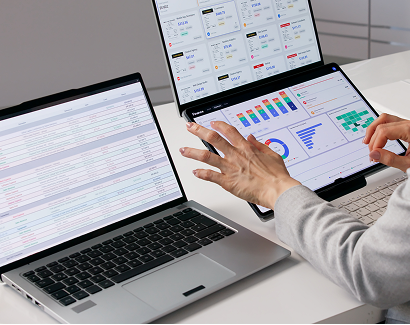
The same contamination, two very different recalls
Supplier Lot 2026-0041
- With level 2 genealogy: if lot traceability software indicates it was only consumed in production batches 8821 through 8834, which shipped 840 units to 12 customers, the recall can be limited to those customers and units.
- Without it: if the level 2 production genealogy is not available, the manufacturer might have to recall everything produced during that supplier delivery window, which could be 14,000 units and over 200 customers.
Software for Effective Recall Management Coordinates Four ERP Processes
Scope determination
Trace the implicated lot forward to each affected customer, per the FSMA 204 response window, as applicable.
Lot quarantine
Flag affected inventory and stop the shipment of remaining affected inventory.
Customer notification
Direct extraction of impacted customers, shipment dates and quantities from traceability records.
Recall accounting
Coordinate inventory write-downs, credit memos, recall reserves and destruction cost accruals as a single recall event.
See food and beverage ERP inventory management for the recall accounting mechanics.
AI in Lot and Serial Traceability: Compressing Audit Response and Detecting Genealogy Gaps
Traditional lot traceability is retrospective. The genealogy data is in the ERP system and is pulled when there is a recall or audit that needs it. AI-augmented traceability is proactive: it reveals genealogy gaps before an audit, and it shortens the 24-hour recall response from a manual sprint to an automated query.
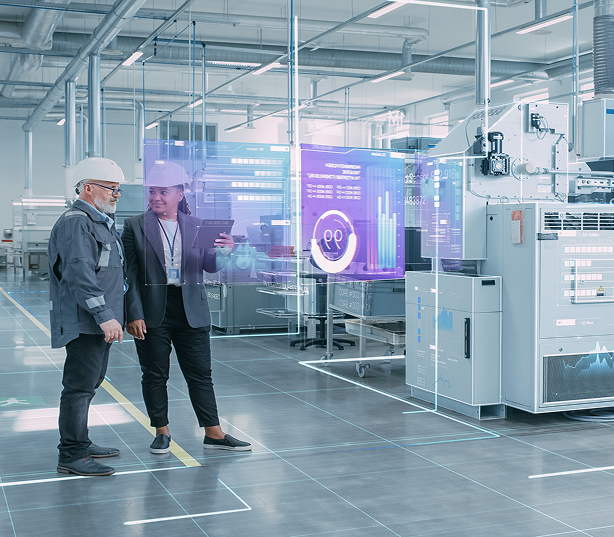
Retrospective becomes proactive: gaps surface before the auditor asks
Agentic audit and recall response
An AI agent could receive an FDA request, customer inquiry, or recall initiation and perform the workflow across ERP records.
It performs the forward trace, creates the list of impacted customers, quarantines remaining inventory across locations, and compiles the necessary traceability documentation. Things that would take days of manual extraction can be built in minutes. See how the data structure that lot traceability software is based on supports it.
AI genealogy gap detection
ML can proactively identify production batches that are missing Level 2 linkages, undocumented lot substitutions, or receiving records that lack corresponding COA references.
Rather than finding these gaps at audit time, manufacturers can identify them as production events arise and stay in a state of continuous trace readiness.
AI recall scope prediction
When a test fails, a supplier sends an alert or a customer complains, AI is able to query the ERP genealogy before a formal recall decision is made. It estimates affected production batches, customer exposure, inventory on hand and potential financial impact.
Quality teams are then able to compare a targeted voluntary recall with a broader precautionary action with better scope information.
These are real examples of manufacturing AI solutions built on top of existing operational data.
How GrayCyan Builds Lot and Serial Traceability into Manufacturing ERP
GrayCyan builds the lot genealogy data infrastructure on top of the manufacturer's existing ERP, featuring scan-based lot capture at every production event, structured genealogy records linking incoming lots to production batches to customer shipments, and AI-powered audit response compressing the 24-hour trace from a manual sprint to an automated query.

Captured at the event, not reconstructed at the audit
What GrayCyan Creates
- Level 1-2-3 genealogy records: live ERP queries are linked, so forward and backward traces are available for incoming lots, production links and shipments.
- Scan-based lot capture: lot data captured at receiving, production issuing, quality inspection and shipping, cutting down on manual entry and transcription errors.
- Agentic audit response: AI generates FSMA 204, AS9100 or pharmaceutical audit packages from ERP genealogy data.
- Genealogy gap detection: ML indicates incomplete trace records before audit time.
One USDA-regulated meat processor, after moving to live ERP genealogy data
One USDA-regulated meat processor reduced audit response time from two to three days to less than 60 seconds with live ERP genealogy data. See ERP inventory management.
Frequently Asked Questions: Lot and Serial Traceability
Lot Genealogy Gaps That Show Up at Audit Time?
What ERP do you run? What regulatory framework drives your traceability requirements? Where does your lot genealogy fail: receiving, production linkage, or shipment? GrayCyan will show you what full lot genealogy and AI-driven audit response can look like on your current ERP.
See lot traceability software or begin with our AI Readiness Assessment.