
ERP Inventory for Manufacturing: WIP Tracking, Standard Costing and Inventory Automation Built on Your Existing ERP
GrayCyan does not sell a manufacturing ERP system.
GrayCyan connects WIP tracking, standard cost variance, component consumption and valuation to your existing manufacturing ERP with practical AI automation.
Book a Discovery Call→ Featured ›
 Featured ›
 Client
 Featured ›
 Featured ›
 Featured ›
 Partner
 Member
 Featured ›
 Featured ›
 Featured ›
 Featured ›
 Featured ›
 Featured ›
 Featured ›
 Featured ›
 Featured ›
 Featured ›
 Featured ›
 Featured ›
What Is Work in Process Inventory and Why Does It Cause Problems in Manufacturing ERP?
Work in process inventory (WIP inventory) is the value of materials and components that have entered production but have not yet become finished goods. In manufacturing accounting, it sits between raw materials and finished goods on the balance sheet. It includes partially completed production orders, subassemblies, direct labor and applied overhead.
Most ERP systems can manage WIP inventory. Accuracy breaks down when production data arrives late or requires operators to enter the same information twice. GrayCyan connects material issues, labor bookings and overhead applications to existing ERP production orders, helping the system reflect work on the floor as it happens.
The WIP inventory formula
Beginning WIP Inventory + Manufacturing Costs Added During the Period − Cost of Goods Manufactured = Ending WIP Inventory
The formula is simple. The transactions behind it are not.

Every Issue and Booking Changes the Balance
Every material issue, labor booking and overhead application changes the balance.
A mid-sized food or industrial manufacturer may have hundreds of production orders open at once, with data flowing in from barcode scanners, an MES, time-tracking systems, and manual ERP entries.

WIP Understated, COGS Misstated
When component consumption is recorded late, WIP is understated.
And cost of goods sold can be misstated as a result.

A Variance With No Trail to Follow
When backflush costing relies on an inaccurate BOM, the resulting variance tells the controller that something is wrong.
But it offers little help finding the cause.
How ERP Handles Manufacturing Inventory: Standard Costing, Component Consumption and WIP Valuation
The key features in manufacturing inventory control differ from those in general inventory software. Manufacturing inventory management must account for production costs, issue components at the correct point and value open work based on its actual stage of completion.

Standard Cost Variance
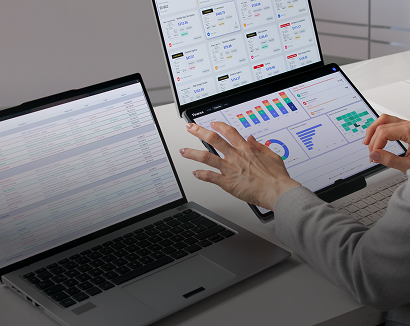
Standard costing assigns an expected cost to each component, labor operation and overhead rate in the BOM. Actual production results create three useful signals: material price variance, material quantity variance and labor efficiency variance.
The report may already exist in the ERP but reviewing it after month end is too late to correct the production problem. Automated flagging can alert the team when actual consumption moves beyond an agreed threshold while the order is still open.
Component Consumption and Backflush Costing
A manufacturing ERP system may relieve components at order release, after each routing operation or when finished goods are received. Early issue can overstate WIP during production.
Backflush costing reduces transaction volume, which suits stable, repetitive operations, but it depends on accurate BOMs. When actual usage differs from the BOM, there may be no intermediate transaction trail to explain the variance. Regulated operations may also need actual lot consumption recorded during production for traceability and compliance.
WIP Valuation
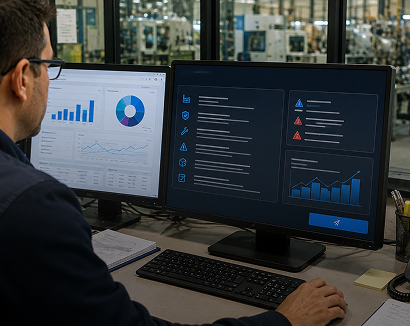
ERP WIP valuation generally combines materials issued, labor booked and overhead applied to each open order. Late issues, delayed time entries and batch overhead postings create a gap between the balance sheet and the floor.
GrayCyan can connect barcode scans, MES time capture and production data to ERP transactions, then reconcile the recorded WIP balance against physical order status. The controller sees discrepancies much sooner in practice, and the production team has a specific order or transaction to investigate.
ERP Inventory Features for Manufacturers
The best ERP inventory systems for manufacturing businesses are those whose transactions connect cleanly to production orders, cost centers and compliance records. A long feature list has little value if the team still reconciles spreadsheets at the end of every shift.
BOM-Driven Component Consumption
Posts material issues to the correct production order.
Lot and Serial Traceability
Forward and backward, from source material through finished goods.
Current WIP Valuation
Based on actual material, labor and overhead transactions.
Standard Cost Variance by Order
With thresholds for material, labor and overhead exceptions.
Multi-Level BOM Support
For subassemblies and phantom items.
Capacity-Based Scheduling
Connected to component availability.
AI automation can monitor those transactions for unusual consumption, aging orders and delayed postings. It can also update forecasts from actual usage and assemble compliance records from production data. The benefit is less manual reconciliation and earlier action on the exceptions that affect margin or delivery. Teams spend less time assembling reports and more time correcting the material, labor or scheduling issue behind each exception.
GrayCyan does not sell a manufacturing ERP system. Its work adds an automation and integration layer to the system already running, so existing WIP, costing and inventory functions use timely production data. See how this approach supports ERP AI automation.
Is your team still reconciling spreadsheets at end of shift?
Tell us which ERP you run and where the production data stops flowing. We start with the operational gap, not a feature list.
Book a Discovery Call→How to Choose an ERP Solution for Manufacturing Inventory Control
Most selection guides focus on feature checklists. Operational fit matters more. Does the system match how production runs, or will it create another manual handoff? Ask vendors to demonstrate these five points with your own workflow and sample data.
Costing Method
How are standard, actual, average and FIFO costs handled, including significant deviations?
Consumption Trigger
Can components post at issue, operation completion or backflush, and which method supports your compliance needs?
Live WIP
Can the system show the current balance for an open order, not only a cost report after closing?
Lot Traceability
Can it trace one raw material lot through every production order and finished lot that consumed it?
Shop Floor Connection
Can barcode, MES, labor and machine data create ERP transactions without duplicate operator entry?
If the decision is still open, an independent ERP consultant should assess platform fit. GrayCyan becomes relevant when a system has been selected or is already live but inconsistent data entry keeps its WIP, costing or component functions from working as designed. Learn more about independent ERP consulting.
GrayCyan ERP Inventory Automation: Connecting Production Data Without Manual Entry
Manufacturers usually call when the ERP is live but production data is still moving through spreadsheets, batch uploads or end of shift entry.
GrayCyan connects that activity to the existing manufacturing inventory management system, using the current workflow as the starting point.
What GrayCyan connects:
- Component capture: a barcode scan at material issue writes to the production order component line.
- Variance monitoring: actual and standard consumption are compared before the order or month closes.
- WIP reconciliation: ERP balances are checked against the physical status of open work.
- Backflush monitoring: inventory movement is compared with BOM based consumption to expose inaccurate masters.
- Lot traceability: component lots remain connected through WIP to finished goods and compliance records.
The manufacturer owns the completed system and documentation, with no recurring software license from GrayCyan. Explore related manufacturing AI solutions.
Frequently Asked Questions: ERP Inventory for Manufacturing
Ready to Automate Manufacturing Inventory in Your Existing ERP?
Tell us which ERP you run and where WIP tracking, standard costing or component consumption breaks down. GrayCyan will show you how production data can connect to the inventory module without replacing the ERP.
The discussion starts with the operational gap, the available data and the simplest useful next step.
Start with our AI Readiness Assessment → or see ERP AI automation →