
AI for Food Manufacturing and CPG Brands: Compliance, Audit and Supply Chain
No platform replacement. Works alongside your existing systems.
Automating batch records, audit dossiers, co-packer traceability, and supply chain data flow for USDA-regulated food manufacturers and CPG brands.
Assess Your AI Maturity Now



















AI in Food Manufacturing: What It Means for Regulated Operations
Food manufacturing runs on precision, meaning it needs exact temperatures, lot weights, and compliance windows. But most food operations still track that precision manually across disconnected systems. And it is the same one or two people who have the complete knowledge of how everything works.
AI in food manufacturing is the use of intelligent systems that automate and coordinate operational processes across production, quality, compliance, and supply chain functions. In practice, batch documentation is automated, yield is monitored in real time, audit dossiers are generated instantly, and supply chain data flows between systems without manual involvement.
Food production AI does not replace existing software. It connects the systems manufacturers already use and removes the repetitive administrative work that slows down operations.
There is a significant difference between AI in food manufacturing and AI used in other industries, and the reason is the regulatory environment. Food manufacturers operate under USDA regulations, FSMA requirements, HACCP documentation standards, allergen controls, co-packer traceability obligations, and lot-level accountability requirements. Generative AI tools are not designed around these regulations, which is why food manufacturing automation has to be built specifically for regulated operations.
GrayCyan builds AI for USDA-regulated meat processors, CPG food brands, and co-packer-dependent manufacturers, without replacing existing platforms. Our systems automate compliance-heavy workflows, improve operational visibility, and create data flows that production, quality, and supply chain teams can trust.
Six Areas Where Food Operations Lose the Most Time
These are the six areas where food manufacturing operations lose the most time and create the most risk to accuracy and compliance confidence. Each one includes how AI addresses it.

Co-Packer Visibility Gaps
It often happens that lot numbers are received via text messages and photos and are communicated informally. And then it is already too late to spot the errors, because by that time orders are already at risk.
For many food brands, the co-packer represents the largest visibility gap in the supply chain. Critical production data is scattered across emails, spreadsheets, messages, and phone calls. This makes tracing data extremely challenging, especially when questions arise around inventory, quality or fulfillment.
GrayCyan creates a structured co-packer data capture layer that converts informal inputs into query-ready lot records, allotment data, and traceability logs. This enables AI in food manufacturing to connect production data across systems without requiring co-packers to adopt new software or change their existing processes.
“Lot tracking accuracy from co-packer to shelf, without requiring your co-packer to change the way they work.”Co-Packer Visibility

Audit Prep That Shuts Down Operations
Responding to a USDA inspector becomes a tedious process. It involves searching binders, cross-referencing spreadsheets, and pulling records across systems. This entire process can take up to 2 to 3 days.
Teams rush at the last minute to locate batch records, smoker logs, sanitation documentation, traceability reports, and supporting evidence for FSMA, HACCP, and USDA compliance requirements. In many facilities, critical information is spread across multiple systems and filed manually, which turns routine inspections into operational disruptions.
GrayCyan's food production AI creates a centralized production database with instant audit dossier generation. You can search and retrieve every batch record, smoker log, quality record, and traceability document in under 60 seconds.
“Audit response time is reduced from days to seconds, without disrupting production.”Audit Prep

Manual Batch Records and Compliance Gaps
When there are paper batch sheets, hand-transcribed smoker readings, and spreadsheet formulas introduced into a production run, there are bound to be silent errors. A wrong temperature reading, weight entry, or spreadsheet formula can create compliance risks that remain undiscovered until an audit, a production review, or a customer enquiry.
The single largest source of USDA compliance errors in meat processing is batch documentation written manually. AI batch capture eliminates the transcription step altogether. For facilities focused on food manufacturing automation, reducing manually entered data is the fastest way to improve both operational accuracy and regulatory compliance.
GrayCyan's AI-powered batch capture records Delta-T data, temperatures, weights, and lethality evidence automatically, at the source and during every run. Instead of relying on operators to transfer production data between systems and handle paperwork manually, food production AI captures and structures compliance evidence during the production process.
“Compliance records are built during production instead of being reconstructed before an audit.”Batch Records

Yield Surprises and Packout Errors
Shortfalls often tend to be discovered after packout has already begun, which makes corrective action reactive rather than preventive. Missing units cost time and product, and they make customers lose trust.
In many food production environments, teams are not aware that they have missed yield targets until the product is already on its way to packing or fulfillment. At that point the options become limited and expensive. For CPG brands with tight margin requirements, a 2 to 3 percent variance in yield per run amounts to a significant loss in revenue across a production year.
GrayCyan's real-time yield engine calculates actual versus target weight variance during the production run, and operators are alerted before packout begins. Instead of end-of-shift reports explaining what took place, food production AI continuously monitors performance and highlights issues while corrective action is still possible.
“Yield shortfalls are caught during production, not after the damage is done.”Yield

Disconnected Systems Across Production and Operations
Your data in QuickBooks, inventory, HACCP tools, shipping platforms, and the Master Order Sheet operates in silos and does not talk to itself. So it falls to the operators to bridge the gap between those systems.
As a result, experienced team members spend hours moving information between systems, reconciling discrepancies, and chasing missing data, instead of focusing on production, quality, and customer service. These manual handoffs result in delays, duplication of work, and operational risk. One client ended up unifying 14 disconnected platforms without replacing a single one.
GrayCyan uses middleware AI to connect your existing platforms, validate data in transit, and eliminate manual handoffs between all the systems in your stack. This is not a new platform. It is the connection layer over the platforms you already use.
“Continuous data flow across systems, reduced manual coordination, and fewer operational errors.”Disconnected Systems

Operational Knowledge Trapped in People
In every business environment there is one person who knows every workaround, every system exception, and every informal process that runs everything. They are the go-to for everyone else. So when they are absent, the operation either slows down or comes to a halt.
Long-tenured employees tend to hold critical knowledge about allotment rules, lot assignment decisions, compliance procedures, customer requirements, and production exceptions. Employees who are 30 to 50 year veterans approaching retirement often leave behind a serious institutional knowledge problem.
GrayCyan builds AI systems that encode your operational logic, including allotment rules, lot assignment exceptions, compliance workflows, and decision-making processes, and turn it into infrastructure the business owns independently. Critical knowledge becomes accessible, searchable, and repeatable across teams rather than remaining trapped with specific people.
“Operations can run consistently regardless of who is in the building.”Tribal Knowledge
Every workflow above is already operational in GrayCyan food manufacturing deployments. Manufacturers still mapping their gaps can start with the AI Strategy and Readiness Assessment.
How long would a USDA audit dossier take you today?
If the honest answer is days, that is usually the first workflow worth automating. Tell us which systems hold the records.
AI for CPG Brands: Supply Chain, Compliance, and Traceability
CPG brands do not just manage one facility. They oversee a network of co-packers, ingredient suppliers, contract manufacturers, and retail compliance requirements all at the same time. Unlike a single-site manufacturer, a CPG brand must coordinate production, traceability, inventory, and compliance across multiple partners while maintaining visibility into every stock keeping unit. This is where CPG AI becomes valuable, because it creates a connected operational layer that turns fragmented data into actionable intelligence.

Supply Chain Traceability
Every lot from each co-packer is tracked in one system, instead of being spread over 14 texts, spreadsheets, and email chains. All informal supplier communication is structured into lot records, traceability logs, and audit-ready documentation.
This is AI supply chain visibility built specifically for brands that depend on external manufacturing partners.
Multi-SKU Compliance Management
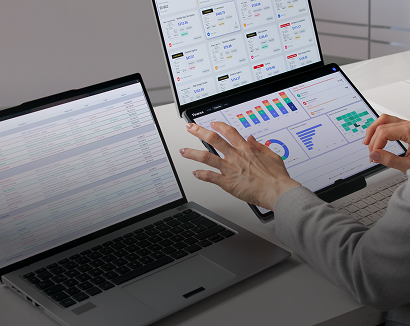
Allergen verification, label compliance, and FSMA documentation across 50 or more SKUs is managed automatically. It does not need a compliance manager who spends time manually checking formulation sheets before every production run.
This approach to AI in the CPG industry reduces compliance risk while improving consistency across product portfolios.
Ingredient Cost and Recipe Intelligence
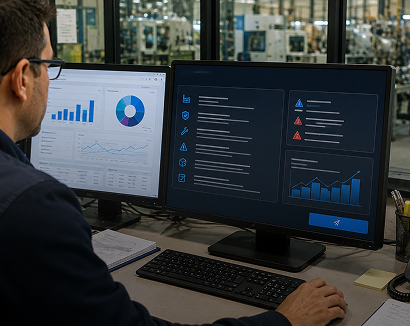
When ingredient prices change, recipe costs recalculate automatically across your entire SKU library. No quarterly updates required, and no margin surprises either.
With supply chain AI consulting added to the mix, brands gain real-time visibility into ingredient cost fluctuations and profitability impacts.
GrayCyan builds CPG AI that works at the co-packer interface, the ingredient level, and the compliance layer, not just one piece of the operation. Our systems complement broader manufacturing AI solutions while also addressing the unique challenges of modern CPG operations.
Food Manufacturing Compliance Automation: USDA, FSMA and HACCP
Food manufacturing compliance is not a documentation exercise. It is a daily operational requirement. USDA inspections, FSMA traceability rules, HACCP critical control points, and allergen declarations all require records, and most facilities still create those records manually. Collecting compliance data is not the challenge. The real challenge is ensuring the right information is captured accurately, stored consistently, and retrievable immediately when required.
USDA and FSMA Compliance
The documentation required to meet FSMA Section 204 requirements is automated and made traceable. Lot-level records from ingredient receipt through finished product are retrievable instantly.
AI regulatory compliance systems create a continuous chain of custody without relying on manual record assembly.
HACCP Critical Control Point Logging
AI batch capture records Delta-T values, cook temperatures, and lethality evidence automatically.
There is no need for manual transcription or retroactive reconstruction. Critical compliance records are generated during production rather than created later.
Allergen Verification and Changeover Tracking
The presence of allergens is verified across formulations before every production run, with automated alerts identifying potential cross-contamination risks during changeovers.
Teams gain greater confidence in label accuracy and food safety controls.
Audit Dossier Generation
Every batch record, smoker log, and traceability document is assembled into an audit-ready dossier in under 60 seconds, at any inspection and at any time. Audit response drops from 2 to 3 days to under 60 seconds.
This is compliance automation built for the way food manufacturing actually works. It is not a generic document management tool with a food industry label.
Supply Chain AI for Food Manufacturers and CPG Brands
Food supply chains are complex. Perishable ingredients, lot-level traceability requirements, co-packer dependencies, and retail compliance windows create coordination overhead that manual processes cannot sustain at scale. Effective AI supply chain systems eliminate information bottlenecks, improve traceability, and create visibility across suppliers, production partners, and internal operations.
Co-Packer Data Integration
Lot numbers, production counts, and traceability data from co-packers are captured automatically, whether they arrive as text messages, spreadsheets, or portal uploads. Supply chain AI transforms informal communication into structured operational records.
Ingredient Supplier Coordination
PO status, delivery confirmation, and ingredient lot matching are tracked in one place, with no manual cross-referencing between purchasing, receiving, and production planning. Teams gain a single view of supplier performance and inventory readiness.
Demand Signal and Inventory Intelligence
Actual yield versus projected yield is tracked in real time, with production planning adjustments suggested before any shortfall impacts customer orders. This helps prevent costly stockouts and fulfillment disruptions.
System Integration Across the Stack
AI middleware unifies QuickBooks, inventory platforms, HACCP tools, shipping systems, and order management. More than 14 platforms connected, and none of them replaced.
As a supply chain AI consulting partner for food manufacturers and CPG brands, GrayCyan focuses on connecting existing systems rather than replacing them. Our approach to AI supply chain management creates a connected foundation for growth for organizations looking to strengthen traceability, supplier coordination, and operational visibility.
What Changes When AI Enters Your Food Operation
Here is what the same manufacturing operation looks like before and after AI is introduced. This is not theory. These are the specific workflows that have already been automated. The difference is not just faster reporting or better visibility. It is the shift from manual coordination to automated execution across compliance, traceability, costing, quality, and operations.
Every item in the right column is already operational in GrayCyan food manufacturing deployments. This is not a roadmap, nor a proof of concept.
| Before AI | After AI |
|---|---|
| Batch records transcribed manually from smoker panels and paper sheets | Batch data captured automatically at the source, every run, smoker, lot |
| Audit prep consumes 2 to 3 days of management time per inspection | Full audit dossier retrieved in under 60 seconds |
| Yield shortfalls discovered after packout has begun | Real-time yield alerts issued during the production run |
| 14 platforms synced manually, by the same one or two people every day | All systems connected through middleware, no manual bridges and no single point of failure |
| Recipe costing updated quarterly or when vendors increase prices | Recipe costs recalculated instantly when ingredient prices change |
| Allergen compliance verified manually before each production run | Allergen verification automated across formulations and changeovers |
| Customer complaints tracked in spreadsheets, trends spotted late | Complaint intelligence clusters issues and alerts before recalls |
How many platforms do your operators bridge by hand?
One client was on 14. None of them were replaced. Tell us what is in your stack and where the handoffs sit.
Quantifiable Impact: What Food Manufacturers Measure After Deployment
These are not projected estimates. They are outcomes from live GrayCyan deployments in food manufacturing and CPG operations. Across AI in food manufacturing initiatives, the most valuable gains come from eliminating manual work, accelerating compliance processes, improving traceability, and connecting systems that previously operated in isolation.
These results show what food manufacturing automation can achieve when compliance workflows, operational data, and production systems are connected through a unified AI layer. See the full case studies.
Built for Food Manufacturing Teams
GrayCyan's food manufacturing automation systems are designed for organizations operating in regulated, traceability-driven environments where compliance, production visibility, and operational coordination directly affect growth and profitability.
USDA-Regulated Meat Processors
Operations that run HACCP plans, smoker logs, and USDA daily inspection requirements need more than basic reporting tools.
They need automated batch capture, instant audit dossier generation, and reliable lethality evidence documentation built directly into production workflows. AI in food manufacturing strengthens compliance readiness daily by eliminating manual transcription.
CPG Food Brands With Co-Packer Networks
Brands managing between 3 and 20 co-packers with lot-level traceability requirements across multiple SKUs face constant coordination challenges.
They need structured co-packer data capture, ingredient-to-shelf traceability, and multi-SKU compliance management in one connected system. This is where CPG AI delivers operational visibility that spreadsheets and email chains cannot guarantee.
Co-Packer Dependent Manufacturers
Facilities coordinating production across multiple co-manufacturing partners face inconsistent formats, disconnected systems, and fragmented communication.
They need middleware AI that standardizes data flow without requiring co-packers to change their tools. Combined with AI supply chain capabilities, the result is a consistent operational picture across every partner and platform.
We automate batch documentation, eliminate the audit scramble, and connect every platform, all within your existing operation.
Frequently Asked Questions: AI for Food Manufacturing and CPG Brands
See How Your Food Manufacturing Operation Can Run With AI
Food manufacturing teams do not need more software. They need fewer manual handoffs, faster compliance workflows, and better visibility across production, quality, and supply chain operations.
GrayCyan's AI in food manufacturing is designed to work inside the systems you already use, delivering measurable improvements without platform replacement. From USDA audit response times of 60 seconds to 14 or more systems unified without replacement, GrayCyan's food manufacturing AI delivers measurable operational change.
See our full manufacturing AI solutions →