
Lot Traceability Software for Food Manufacturers: Automated Lot Tracking Built on Your ERP
FSMA 204 deadline: July 20, 2028. Built on the ERP you already run.
Every food manufacturer needs more than basic inventory tracking to meet today's traceability, compliance and recall readiness requirements. GrayCyan builds custom lot tracking solutions that work with your existing ERP instead of replacing it.
Book a Discovery Call




















 Client


 Partner
 Member











What Is Lot Traceability Software?
Effective lot tracking software for food manufacturers should capture lot data throughout production, connect it with inventory and supply chain records, and make it instantly available when needed. The challenge is that many ERP systems track inventory but they do not automatically capture the operational data that is required for overall traceability.
Lot traceability software tracks every production lot from raw material receipt through finished goods to customer shipment, capturing the data needed to trace any batch forward to affected customers or backward to source ingredients within hours. It is the operational backbone of food recall response and FSMA 204 compliance.
Most food traceability software on the market is a SaaS platform built for operations with dedicated IT teams and ERP integration budgets. Custom-built systems take a different approach: a custom lot traceability system built on top of the ERP you already run, and owned by you at completion.
Food manufacturers use lot traceability software for five core functions
Forward Traceability
Which customers received a lot now under recall or investigation.
Backward Traceability
Which raw material batches and suppliers went into a finished goods lot.
Regulatory Compliance
Producing KDE records in FDA-required format within 24 hours of a request.
Quality Investigation
Identifying which production variables correlate with a defect.
Supplier Accountability
Mapping incoming lot quality against supplier performance over time.
July 20, 2028 is closer than it looks.
Tell us which ERP you run and which FTL foods you handle. We will map your KDE gap against what the ERP already captures.
Why Off-the-Shelf Lot Tracking Software Fails Mid-Market Manufacturers

ERP Integration Is Expensive and Slow
Most of the platforms support SAP and NetSuite generally.
So if you use Epicor, Fishbowl, Acumatica, or Odoo, you are looking at a custom integration project before the software does anything.

You Pay Extra for What Your ERP Should Already Do
Most ERPs already track lot numbers.
The real challenge is KDE capture, CTE linkage and 24-hour recall response.

You Do Not Own the System or the Data
SaaS platforms create ongoing licensing dependency.
So if you stop paying, your traceability history goes with it.
Key Features of GrayCyan Lot Traceability Software
Core capabilities built specifically for food manufacturers who need FSMA 204 compliance, real-time visibility, and a system that works with the ERP they already run.
Automated Lot Code Assignment and Tracking
Every production lot gets a Traceability Lot Code (TLC) assigned automatically at the point of creation, tied to raw material batch, production date, shift, line and operator records in your ERP.
Lot codes follow the product through finished goods to shipment with every transformation recorded. There is no need for manual entry, no spreadsheets and no reconciliation after the fact.
KDE Capture at Every Critical Tracking Event
KDE (Key Data Elements) contain TLC, product description, quantity, location, date, supplier or recipient, captured automatically at each Critical Tracking Event: receiving, transforming, creating and shipping.
All KDE records are stored in a structured, sortable format so an FDA recall response report is producible within 24 hours of any request.
Real-Time Lot Traceability Dashboard
Live visibility into every open lot: current location, which raw material batches it contains, which finished goods it became, and which customers received it.
Forward and backward trace in seconds: identifies every affected shipment from a single raw material in one query.
Supply chain visibility improvement: incoming lot codes from co-packers, ingredient suppliers, and contract manufacturers are mapped against finished goods automatically, closing the most common supply chain visibility gap.
Recall Simulation
Run a mock recall on any lot before a real recall happens, to see every affected finished product, every customer shipment, and every raw material batch in the chain.
This also documents the recall response process for auditors, showing the operation can execute a trace within the required timeframe.
FSMA 204 Compliance Reporting
Electronic, sortable traceability reports in FDA-required format. Traceability Plan documentation generated directly from system configuration.
A full audit trail for every KDE record: who captured it, when, and from which system.
Supplier and Ingredient Traceability
Every incoming raw material lot is linked to its supplier, purchase order, and receiving record, then forward-traced through every finished good it contributed to.
Supplier scorecards are derived from lot-level quality and compliance data.
These features are not a fixed product checklist. GrayCyan configures each system to match the specific CTEs in your operation and the KDE gaps in your existing ERP.
July 20, 2028 is closer than it looks.
Tell us which ERP you run and which FTL foods you handle. We will map your KDE gap against what the ERP already captures.
Works With Your Existing ERP: How Integration Actually Works
The most common reason food manufacturers delay traceability implementation is fear of ERP disruption. The second most common reason is the cost of ERP integration, which most platforms quote separately from the software license.
A custom-built system's integration approach is different. A middleware layer connects to your ERP through API without modifying its structure or configuration. It reads lot tracking data, production records, and inventory information already in the ERP, and writes KDE records back as structured data, visible inside the tools your team already uses.
Deployments can run cloud, on-premises, or hybrid, depending on your data sovereignty requirements. For manufacturers under ITAR, FDA, or USDA data requirements that prevent cloud-based SaaS, GrayCyan deploys the full traceability stack on facility-owned hardware with no external data transmission.
Owned by You at Completion
No licensing fees. No vendor dependency.
Built for FSMA 204 Compliance: Regulatory Benefits of Lot Traceability Software
FSMA Rule 204 requires food manufacturers handling high-risk foods to maintain KDE records at every CTE and produce them to the FDA within 24 hours. The compliance deadline is July 20, 2028, and most food manufacturers cannot currently meet the 24-hour response requirement with their existing systems.
FSMA 204 Readiness
KDEs captured automatically at every CTE (receiving, transforming, creating, shipping) in FDA-required structured format.
24-Hour Recall Response
Complete forward and backward trace for any lot, producible in minutes rather than days.
Written Traceability Plan
Generated from system configuration to document your CTEs, KDE fields, and TLC assignment process.
USDA and HACCP Documentation
Batch records, smoker logs, and lethality evidence generated during production instead of reconstructed before an audit.
Audit Readiness
Every inspection record timestamped, scored, and traceable to lot, shift, operator, and system.
A USDA-regulated meat processor using GrayCyan's compliance automation generates batch records and lethality evidence automatically during each production run.
2 to 3 Days → Under 60 Seconds
Audit response time dropped from 2 to 3 days to under 60 seconds.
July 20, 2028 is closer than it looks.
Tell us which ERP you run and which FTL foods you handle. We will map your KDE gap against what the ERP already captures.
Best Practices for Implementing Lot Traceability Software
The most common lot traceability implementation mistakes happen before any system is configured, in the data audit phase. These best practices come from GrayCyan's deployments across food manufacturers, co-packers, and distribution operations.
Data audit, TLC logic design, ERP integration, KDE gap closure, recall drill, go-live. The first deployment typically takes 6 to 10 weeks for a single production line.
Start With a Data Audit, Not a System Selection
Map every CTE in your operation and identify which KDE data you currently capture, where it lives, and what's missing.
Most manufacturers discover they already capture 60 to 70% of required KDEs, where the gap is smaller than expected.
Define Your TLC Assignment Logic Before Building Anything
How lot codes are generated, what triggers a new lot number, and how co-mingled materials are handled.
These decisions affect every downstream system design.
Connect to Your ERP First, Add New Data Capture Second
The most durable lot tracking systems use ERP data as the foundation.
They fill gaps with targeted data capture, not the reverse.
Test the 24-Hour Recall Response Before Go-Live
Run a mock recall on a real historical lot and time the response.
If it takes more than two hours, the system needs further work before FDA enforcement begins.
Include Upstream Suppliers in the Implementation Plan
Your traceability record is only as complete as the KDE data your suppliers provide.
Supplier onboarding is typically the longest phase of a full FSMA 204 implementation.
Lot Traceability in Production: GrayCyan Deployments
Both deployments run on existing ERP infrastructure. Neither required a new platform, and both transferred full ownership to the client at completion.
Fishbowl ERP, Distribution Manufacturer
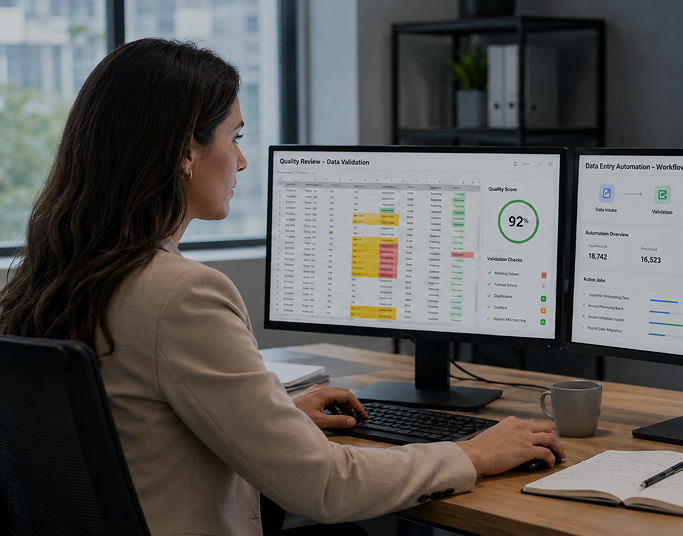
Problem: Lot tracking data spread across manual entry in ERP, WMS, and procurement, roughly 12 hours per day of data bridging, with no single source of lot history across the supply chain.
What GrayCyan built: API middleware connecting Fishbowl ERP to automated lot data capture, with incoming lots logged at receiving, production lots created from BOM components, and finished goods lots linked to outbound shipments.
Result: Manual lot data entry reduced 85%, from 12 hours to under 2 hours daily. Full lot genealogy traceable in minutes, with any incoming supplier lot traceable forward to every finished goods shipment without manual query. No ERP replacement.

USDA-Regulated Meat Processor, Compliance Automation
Problem: USDA batch records, smoker logs, and lethality documentation built manually after each production run. Audit response required 2 to 3 days to assemble records.
What GrayCyan built: Automated compliance documentation generating USDA-required records during production, with lot codes, batch records, and lethality evidence captured at CTEs.
Result: Audit response time reduced from 2 to 3 days to under 60 seconds, with every record traceable to lot, shift, and operator.
Can you produce a full trace in under two hours?
That is the real test. Run a mock recall on a historical lot, and if it takes longer, the gap is worth mapping now.
Who This Is For
Food Manufacturers and CPG Brands
50 to 500 employees handling foods on the FDA Food Traceability List.
Operations on an Existing ERP
NetSuite, Epicor, Fishbowl, Acumatica, SAP, Odoo or Dynamics that lacks full FSMA 204 KDE capture.
Co-Packers and Contract Manufacturers
Who need to provide compliant lot-level data to retail or foodservice customers.
Manufacturers Who Want Ownership
Who want to own their traceability system without ongoing SaaS licensing fees.
Operations Post-Recall
That have experienced a recall and need a documented, defensible lot traceability system going forward.
Not the right fit:
- Operations where no lot tracking data currently exists in any system, where a data foundation project is needed first
- Businesses looking to evaluate off-the-shelf SaaS platforms, since GrayCyan builds custom systems, not packaged software
- Large enterprise operations with a dedicated IT team and Tier 1 ERP, where a packaged platform may be more appropriate
Looking for something broader than lot traceability? See GrayCyan's full Manufacturing Solutions.
Frequently Asked Questions: Lot Traceability Software
Ready to Build Lot Traceability Software on Your Existing ERP?
Tell us which ERP you run, which foods you handle from the FDA Traceability List, and what your current lot tracking gap looks like. GrayCyan will show you what a compliant lot traceability system built on your existing infrastructure looks like using your actual data, not a generic platform demo.
GrayCyan has built lot traceability and compliance automation for USDA-regulated meat processors, Fishbowl ERP manufacturers, and air-gapped defense-adjacent operations. Every system is owned fully by the client at completion.
See the FSMA 204 compliance deadline guide →