
Manufacturing Execution System (MES): A Complete Guide for Manufacturers
Not every manufacturer needs a full MES. This guide says when you do.
What an MES actually does, the 11 ISA-95 functions, how MES differs from ERP, WMS and WES, what implementation costs and takes, and where AI augmentation of an existing ERP delivers equivalent value at a fraction of the cost.
Book a Discovery Call






















 Client


 Partner
 Member











What Is an MES System? Manufacturing Execution System Defined
A manufacturing execution system (MES) is software that monitors, tracks, documents, and controls the transformation of raw materials into finished goods on the production floor.
MES sits between the ERP, which manages business planning, orders, and finance, and the physical production equipment such as SCADA, PLCs, and CNC machines, collecting production data as it happens and using it to manage work orders, track quality, schedule resources, and generate compliance documentation.
What MES is not
MES is not a replacement for ERP, as ERP holds the production plan, bill of materials, and financial record. MES executes the plan and reports actual results back to ERP.
MES is not a SCADA system. SCADA controls physical equipment such as temperatures, pressures, and speeds. MES uses data from SCADA to manage the production process.
MES is not the same as a production scheduling system. MES executes the schedule, and it does not create it, though some MES platforms include scheduling modules.

ERP Manages Business Processes
It shows purchase orders, sales orders, production planning, and financial accounting.
ERP operates in transaction time, meaning orders are created, confirmed, and closed.

WMS Manages Warehouse Execution
It helps in receiving, storage, picking, and shipping.
WMS operates close to real time, with inventory movements happening in minutes.
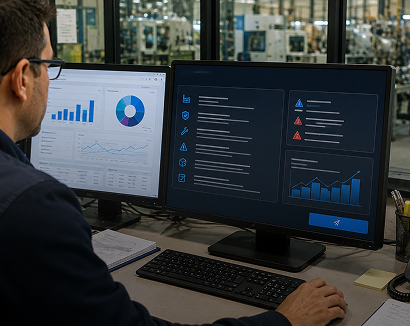
MES Manages Production Floor Execution
It manages work order dispatch, operator instructions, quality data collection, and machine integration.
MES operates in true real time, capturing production events in seconds as they happen.
What Does MES Do? The 11 ISA-95 Manufacturing Execution System Functions
The ISA-95 standard (IEC 62264) defines 11 functional areas of an MES system. Not every MES platform covers all 11, and most midmarket manufacturers do not need all 11. Understanding which functions are relevant to a specific operation is the starting point for any MES evaluation.
Resource management
Tracking the availability and utilization of production resources, including equipment, personnel, tooling, and materials, in real time.
Which machine is running, which operator is certified for which process, and which tools are in service.
Operations scheduling
Dispatch of work orders to the production floor in the optimal sequence, balancing equipment capacity, operator availability, material availability, and customer delivery requirements.
MES scheduling operates at the floor level, not the planning level.
Dispatching production units
Releasing work orders and production units to the floor in a sequenced batch or queue.
This ensures the correct work order, materials, and instructions reach the right work center at the right time.
Document management
Distributing and controlling production documentation, such as work instructions, quality specifications, drawings, and regulatory procedures, at the point of use.
This ensures operators use the current document revision, not a superseded version printed the week before.
Data collection
Capturing production data at the point of manufacture, including quantities produced, scrap, downtime reason codes, process parameters, and quality measurements.
Data arrives from operator input, barcode scans, or automated equipment interfaces.
Labor management
Tracking operator activity against production orders, including time on job, work performed, and certifications applied.
This provides actual labor data for job costing and productivity analysis.
Quality management
Capturing and analyzing quality data at the production event, including in-process inspection results, SPC data, and hold and deviation triggers.
This connects quality data to the specific work order, operator, machine, and material lot.
Process management
Monitoring production processes against specified parameters and alerting when parameters deviate, such as temperature, speed, pressure, and cycle time.
This connects process adherence to the production record.
Maintenance management
Scheduling and tracking preventive maintenance on production equipment, recording corrective maintenance events, and linking downtime to maintenance history.
Some MES platforms integrate with CMMS.
Product tracking
Tracking the genealogy of each production unit or batch from raw material through every production step to finished goods.
This connects the as-built record of what materials, processes, equipment, and operators contributed to each unit.
Performance analysis
Calculating production KPIs such as OEE (Overall Equipment Effectiveness), yield, scrap rate, throughput, and cycle time from the production data captured in the ten functions above.
This is the real-time dashboard layer.
MES vs ERP: What Each System Does and Where They Overlap
The most common confusion in manufacturing technology evaluation is whether a manufacturer needs MES, needs better ERP, or needs both. ERP and MES are not competing systems; they are complementary systems that operate at different levels of the production hierarchy.
| ERP | MES | |
|---|---|---|
| Question it answers | What should we produce, and what did it cost? | What is happening on the floor right now? |
| Time horizon | Planning and transaction time | Real-time, second-by-second |
| Data type | Orders, BOMs, routing, financial cost | Cycle times, quality readings, machine and downtime events |
| Examples | Production planning, MRP, financial recording, compliance record keeping | Work order dispatch, in-process quality collection, machine integration, operator instructions |
What ERP Manages
Production planning, including the Master Production Schedule and Material Requirements Planning and capacity planning. Work order creation and management, including production orders, bills of materials, and routing.
Financial recording, including actual versus standard cost and inventory valuation. Compliance record keeping, including lot genealogy and shipping documentation.
What ERP Does Not Do Well
Real-time production floor visibility, operator-level instructions, in-process quality data collection, machine integration, or second-by-second production event capture.
These are the gaps that make manufacturers look at MES in the first place.
What MES Manages
Real-time work order dispatch to the floor so the right work order with the right instructions reaches the right operator and machine at the right time. In-process quality data collection is captured at the production event rather than entered after the fact.
Machine and equipment integration, pulling actual cycle times, downtime events, and alarm data from PLC and SCADA systems. Operator instructions and document control, with current work instructions served at the workstation and signed off at completion.
What MES Does Not Do
Financial accounting, purchase order management, ERP-level planning, or customer relationship management.
Those stay in the ERP, which remains the system of record.
How ERP and MES work together
ERP pushes to MES: the production orders, BOMs, routing, scheduled start and end times, and material allocations.
MES pushes to ERP: actual quantities produced, actual labor hours, actual material consumption, quality hold events, and production order completion, updating ERP financial and inventory records with real production data.
Level 1 → Level 4
The ISA-95 standard defines four levels: Level 1 (equipment), Level 2 (SCADA and control), Level 3 (MES), and Level 4 (ERP). Each level has defined interfaces. For a closer look at how ERP handles the inventory side of this exchange, see ERP inventory management.
MES vs WMS vs WES: Three Systems, Three Operational Layers
For manufacturers who run warehouses and production floors, three systems are frequently confused: MES (manufacturing execution), WMS (warehouse management), and WES (warehouse execution). They are not alternatives; they manage different physical spaces and different operational workflows.

The Production Floor Layer
Everything that happens inside the four walls of the manufacturing operation, including work order dispatch, operator assignments, quality collection, machine integration, and production genealogy.
Users: production supervisors, operators, quality engineers, and maintenance technicians. Integration: receives production orders from ERP, sends actual results back to ERP, and receives sensor data from SCADA and PLCs.

The Warehouse Layer
Receiving, storage, picking, packing, and shipping, or inventory movement from dock to dock.
Users: warehouse receivers, putaway staff, pickers, packers, and shipping coordinators. Integration: receives purchase orders and sales orders from ERP and writes inventory transactions back to ERP in real time.

The Automation Integration Layer
The bridge between WMS and warehouse automation hardware such as conveyors, sorters, AS/RS, and AMRs. WES translates WMS work orders into commands for automation equipment.
Not a user-facing system; it is a machine integration layer between WMS and automation. Needed only when significant warehouse automation equipment is present. Most midmarket manufacturers do not need WES.
How all three work together
ERP handles production planning, the financial record, and the system of record for all inventory. MES handles production floor execution, dispatching work orders, collecting quality data, and building genealogy. WMS handles warehouse execution, from raw materials received from suppliers through finished goods received from production to outbound orders picked and shipped. WES, where automation is present, is commanded by WMS.
See custom WMS development for how the warehouse layer is typically built out, or WMS vs ERP vs WES for a fuller comparison.
MES Implementation: Cost, Timeline, and Integration Architecture
MES implementation is one of the most complex software projects a manufacturer can undertake, because MES requires simultaneous integration with ERP at the planning level, with SCADA and PLCs at the equipment level, and with operators at the workstation level. All three integration points must work in real time for MES to deliver its core value.
Enterprise MES
Siemens Opcenter, Rockwell FactoryTalk, GE Proficy, and SAP Manufacturing Integration and Intelligence. Full ISA-95 function coverage, deep machine integration, and multi-site management.
Cost: roughly $500,000 to $5,000,000 or more in total implementation for a midmarket operation. Timeline: 12 to 36 months. Appropriate for large manufacturing operations with complex multi-site production, regulated industries such as pharma or medical devices that require validated MES, or operations with significant automation equipment investment.
Mid-Tier MES
Plex, Infor MES, Epicor MES, and Acumatica MES modules. Covers the core ISA-95 functions: work order dispatch, quality collection, genealogy, and basic OEE reporting.
Cost: roughly $100,000 to $500,000 for a single-site implementation. Timeline: 6 to 12 months. Appropriate for midmarket manufacturers with moderate production complexity and an ERP in the same vendor family.
Cloud and Lightweight MES
Tulip, Katana, and Duro. No-code or low-code production floor applications with rapid deployment and lower cost.
Cost: roughly $20,000 to $100,000 per year in SaaS fees. Timeline: 4 to 12 weeks. Appropriate for manufacturers whose primary need is digital work instructions, basic quality data collection, and simple OEE reporting rather than full ISA-95 coverage.
The Three Connections That Must Work
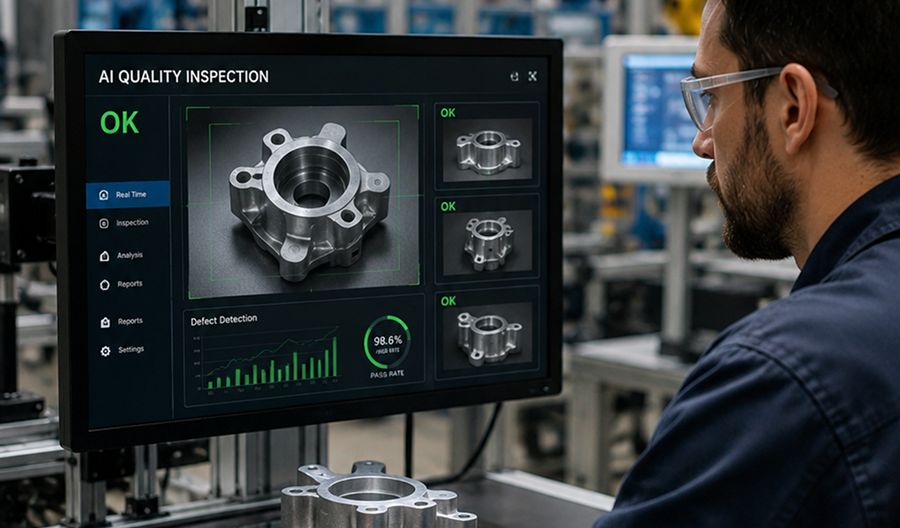
ERP to MES
Production orders, BOMs, routing, and material allocations pushed from ERP to MES, with actual production results, labor, and quality data pushed back.
ISA-95 Part 2 defines the standard data model for this exchange.

MES to SCADA and PLC
Work order parameters pushed to equipment controllers, with process data and alarm events pulled from SCADA into MES.
OPC-UA is the current standard protocol for this connection.

MES to Operator
Work instructions, pick lists, quality forms, and inspection data entry served to operators at workstations.
Delivered through touchscreens, tablets, or industrial terminals.
Typical MES Implementation Phases
Five phases, and the equipment integration phase is the one that most often runs long, because every equipment type needs its own data mapping.
Mid-tier MES runs 6 to 12 months end to end. Enterprise MES runs 12 to 36 months. Lightweight platforms can go live in 4 to 12 weeks because they skip equipment integration entirely.
Requirements and scope
6 to 12 weeks. This determines which ISA-95 functions are needed, which equipment will be integrated, and which ERP transactions will be synchronized.
Each phase overlaps the next, but its approval gate does not.
ERP integration
8 to 16 weeks. This covers production order synchronization, BOM and routing mapping, actual results write-back, and lot genealogy linkage.
Each phase overlaps the next, but its approval gate does not.
Equipment integration
8 to 20 weeks. SCADA and PLC connections, OPC-UA configuration, and data mapping for each equipment type.
Each phase overlaps the next, but its approval gate does not.
Operator interface
6 to 12 weeks. This covers work instruction screens, quality forms, pick lists, and operator certification enforcement.
Each phase overlaps the next, but its approval gate does not.
Testing and validation
8 to 16 weeks. This includes unit testing, integration testing, operator acceptance testing, and validation for pharma and medical device manufacturers.
Each phase overlaps the next, but its approval gate does not.
AI in Manufacturing Execution Systems: What Changes With AI Augmentation
Traditional MES collects production data and presents it on dashboards. AI-augmented MES uses that production data to make predictions, surface anomalies, and automate responses, moving from reactive monitoring to proactive intelligence.
Predictive quality control
A model trained on historical production data and quality outcomes identifies in-process parameter patterns that predict quality failures before the part or batch is complete.
The MES alerts the operator before the defect is produced, not after the inspection rejects it.
Predictive maintenance integration
A model built on equipment sensor data from SCADA identifies degradation patterns that precede equipment failures.
MES schedules maintenance before the failure occurs and before the production schedule is disrupted. OEE improves through prediction rather than reaction.
Dynamic production scheduling
A model built on real-time production floor status, including current cycle times, queue depths, equipment availability, and material positions, adjusts the production schedule as conditions change.
A machine running 15 percent slower than standard triggers automatic work order redistribution rather than a phone call to a supervisor.
Genealogy anomaly detection
A model monitoring production genealogy records flags incomplete or anomalous entries before the batch closes.
It catches missing inspections, missing material scans, or unusual process parameter combinations that need investigation before the product ships.
Agentic production event response
Agentic AI coordinating multi-step responses to production events, so a quality hold triggers automatic work order suspension, material quarantine, and QA notification.
Investigation task generation and ERP inventory status update happen at the same time, without manual orchestration across four systems.
AI in MES vs AI augmentation of ERP for midmarket manufacturers
Not every manufacturer needs a full MES to benefit from AI production intelligence. For midmarket manufacturers with moderate production complexity and a functioning ERP, an AI layer connected to ERP production data can deliver predictive analytics, anomaly detection, and agentic event response without the cost and complexity of a full MES deployment.
OPC-UA Required → Full MES. Not Required → ERP AI.
The choice depends on whether real-time equipment integration through OPC-UA and SCADA is required. If it is not, AI augmentation of ERP production history often delivers equivalent value.
Does Your Manufacturing Operation Need MES?
The MES decision is not binary. It depends on where your production complexity, equipment integration requirements, and compliance obligations sit. Three distinct situations call for three different approaches.

Full MES Is Appropriate When
Real-time machine integration is required, so cycle time, alarms, and process parameters must be captured automatically from PLCs and SCADA rather than entered manually by operators. Regulated industry validation is required, such as pharmaceutical (21 CFR Part 11), medical device (FDA 21 CFR Part 820), or aerospace (AS9100), where the MES itself must be validated as a software system.
Multi-site production with shared work orders and centralized quality management calls for a platform that manages production across multiple facilities at once. Automation equipment investment is significant, including robot cells or CNC machines that require real-time command and feedback coordination.

ERP-Native Production Intelligence Is Sufficient When
Production tracking needs are met by work order completion scanning and ERP production order management, with no real-time cycle time capture from equipment required. Quality data collection happens at the work order or lot level rather than the individual operation and process parameter level.
The operation has a functioning ERP with production order history, and the primary need is better visibility and analytics on that existing data rather than a new execution layer.
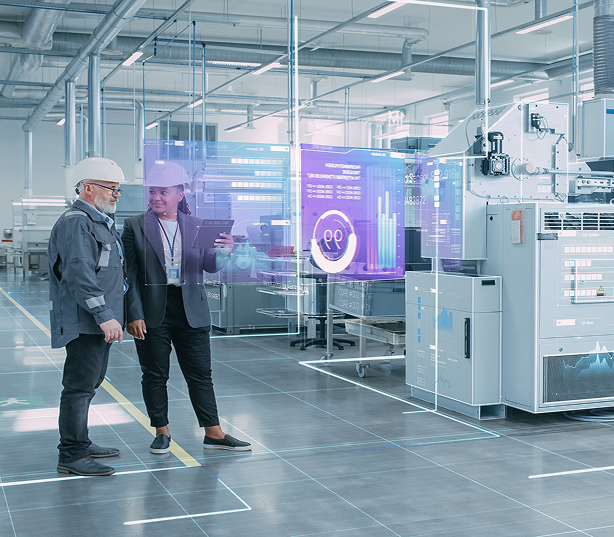
AI Augmentation of ERP Is the Right Path When
The manufacturer needs predictive quality alerts, yield variance detection, demand-driven production scheduling, and agentic compliance documentation but does not need real-time machine integration or validated MES software. ERP production data quality is sufficient for machine learning training, meaning 12 to 24 months of production order history, quality records, and inventory data exist.
The cost of full MES implementation, often $500,000 to $5,000,000, does not justify the incremental benefit over AI-augmented ERP at the current operation scale.
For midmarket manufacturers who need production intelligence without a full MES deployment, GrayCyan builds AI layers on the existing ERP as predictive analytics on production data, agentic event response for quality holds and compliance documentation, and real-time production dashboards from ERP work order data. This connects to the ERP already running, with no MES platform license required.
See manufacturing AI solutions or manufacturing software development for more on this approach.
Manufacturing Execution System Software: What to Know Before Evaluating Vendors
Evaluating MES software vendors requires understanding which functional tier matches the operation's complexity and budget, because enterprise MES platforms and lightweight MES applications have almost nothing in common in terms of implementation scope, cost, and capability.
Enterprise MES Platforms
Full ISA-95, validated, multi-site: Siemens Opcenter, Rockwell Automation FactoryTalk, GE Proficy, and SAP Manufacturing Integration and Intelligence.
Appropriate for large manufacturers, regulated industries requiring validated software, and operations with deep machine integration requirements.
Mid-Tier MES
Core functions, ERP native or integrated: Infor MES, Epicor Advanced MES, and Plex Manufacturing Cloud.
Appropriate for midmarket manufacturers in the same ERP family as the MES platform, where native ERP integration reduces the total cost of integration.
Lightweight MES and Digital Manufacturing
Tulip (no-code factory apps), Katana (manufacturing focused), and Critical Manufacturing (semiconductor and electronics).
Appropriate for manufacturers whose primary need is digital work instructions, basic quality forms, and OEE dashboards without full ISA-95 implementation.
What to evaluate before selecting a platform:
- ERP compatibility: The quality of the native connector for the specific ERP version in use, not just whether a connector exists.
- Machine integration: OPC-UA support and which PLCs and SCADA systems the platform has proven integration with.
- Validation requirements: Whether a validated installation qualification and operational qualification package is available for regulated manufacturers.
- Total cost: Platform license plus implementation, ERP integration, machine integration, operator interface deployment, and ongoing support and upgrades.
Frequently Asked Questions: Manufacturing Execution System
Evaluating MES, or Looking for Production Intelligence Without Full MES Cost?
Tell us which ERP you run, what production visibility or quality intelligence you currently lack, and whether real-time machine integration is a requirement.
GrayCyan will show you whether full MES, an AI-augmented ERP, or a hybrid approach is the right investment for your specific operation.
See manufacturing AI solutions or start with our AI Readiness Assessment →