STAGE 2:
Workflow Intelligence & Process Automation

AI that connects departments, coordinates tasks, and keeps work moving.

Stage 2 is where operational AI shifts from information prep to active execution. At this point, you have reliable data and basic AI copilots in place, now it’s time for automation to handle multi-step processes, reduce delays, and deliver outputs across systems. Workflow Intelligence lets AI coordinate actions across departments, systems, and files without constant human follow-up.

This stage doesn’t replace people. It ensures their work flows smoothly and systems talk to each other reliably.

What Stage 2 Looks Like In Practice

AI handles tasks that typically require staff to gather information, validate it, prepare outputs, and follow up all in a structured, repeatable way.

Manufacturers

  • Generates RFQs, PRs, and vendor requests automatically when thresholds or triggers appear
  • Schedules production or maintenance based on usage patterns or job status
  • Reconciles PO → GRN → Invoice flows with validation
  • Prepares shift updates, quality summaries, and weekly reports

B2B Services

  • Automatically generates onboarding documents and client materials
  • Drafts proposals and follow-ups based on prior interactions
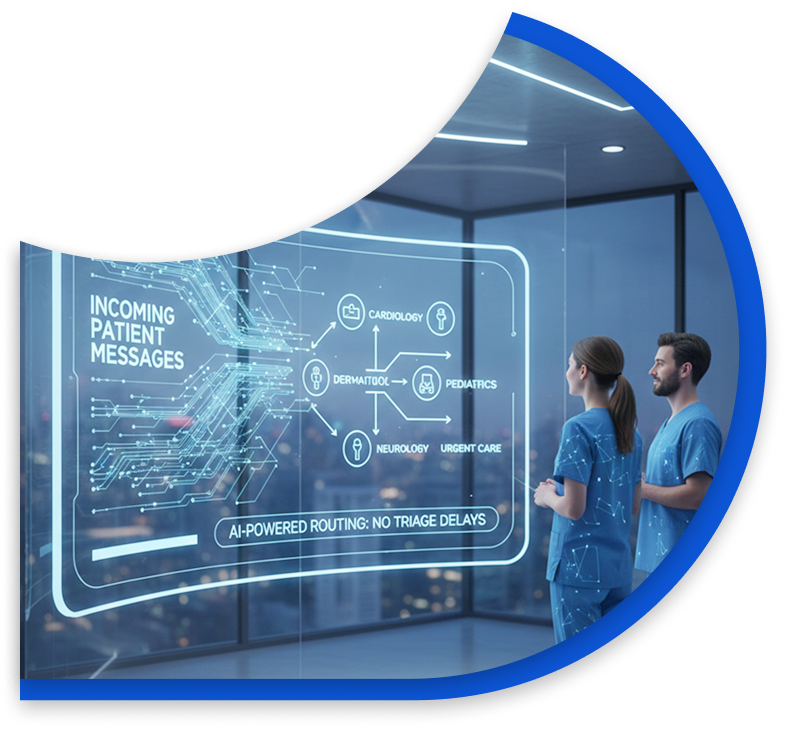
  • Triages and routes service tickets or client issues to the right team
  • Triggers invoice generation or CRM updates after service completion

Healthcare (Administrative Workflows)

  • Prepares full prior-authorization packets from scattered documents
  • Updates EMRs, billing systems, and scheduling tools from a single input
  • Assists with revenue cycle coordination and cross-checks billing data
  • Converts visit data and forms into structured outputs for admin and coding

Education

  • Generates admission packets from submitted applications and uploaded files
  • Validates completeness of enrollment documents and forms
  • Updates SIS, LMS, and communication tools in sync
  • Automates reminders, follow-ups, and student engagement workflows
  • Triggers welcome messages, ID creation, and access provisioning after admission

At this stage, your teams are no longer the bottleneck. AI moves the work forward with minimal handholding.

What AI Delivers at This Stage

Process automation triggered by events, statuses, or inputs

AI recognizes when a step is needed and performs the next action.
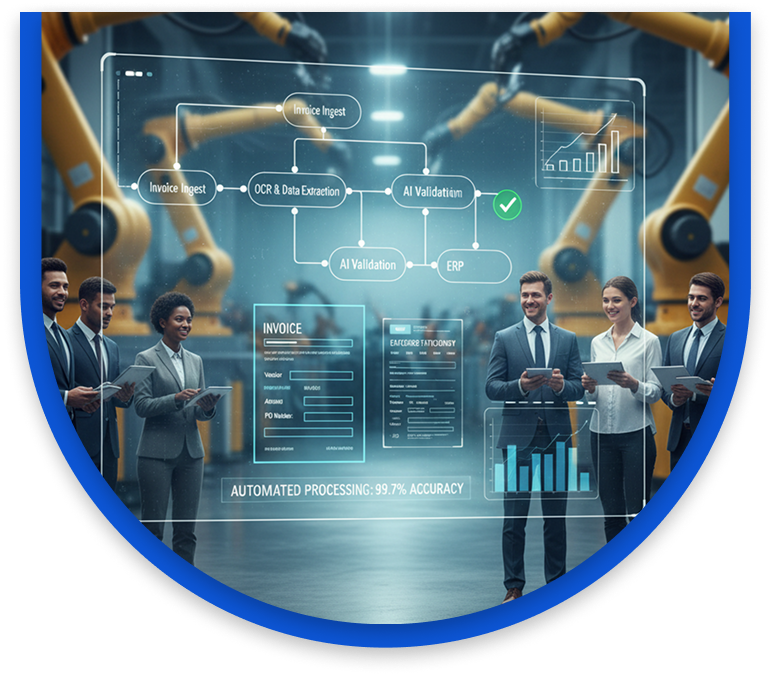
AI agents that complete multi-step workflows end-to-end

From packet assembly to record updates and reminders, AI connects the steps.

Workflow alignment across ERP, CRM, EMR, SIS, LMS, or support tools

AI keeps systems coordinated so teams don’t chase updates.

Automated documentation, packets, and task follow-ups

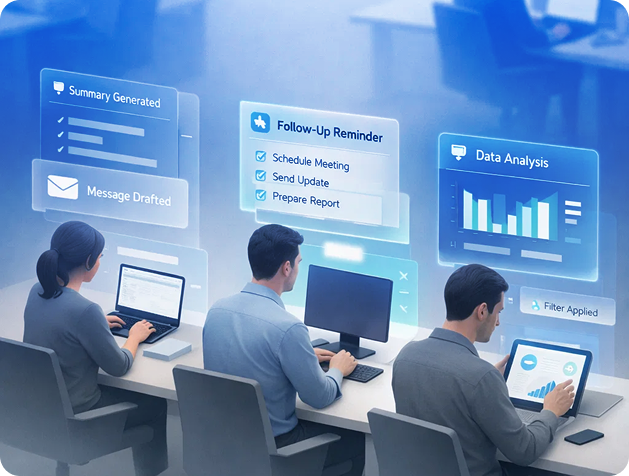
Outputs like reports, authorizations, emails, and summaries are created without manual effort.

Routine decisions supported by intelligent triggers

AI prompts staff with smart next actions based on real activity.

Real-time data sync and updates across departments

Reduces double-entry, inconsistencies, and out-of-sync status issues.

Smooth handoffs and coordination between teams

Agents carry information and actions across departments to complete tasks.

Life Before AI vs. Life After AI

Before

Admins and managers nudge teams manually to move work forward
Documents and records live across systems that don’t sync
Packets and reports assembled by piecing together information from 4–5 places
Delays caused by missing info, human error, or unclear handoffs
Teams waste time chasing follow-ups and tracking task status

Before

AI agents detect status changes and trigger the next steps automatically
Multi-step workflows run cleanly across CRM, ERP, EMR, SIS, LMS, and other tools
Authorizations, onboarding packets, and reports are generated without friction
Copilots guide staff to the next step or complete it automatically
Tasks are tracked and handed off across teams with structured updates

Signs You Are in Stage 2

You’re likely in Stage 2 if:

Stage 2 is where speed, consistency, and automation begin delivering exponential gains.

Most data is clean, searchable, and structured

AI already handles simple summaries or outputs

Teams still manage coordination manually

There’s friction in keeping systems updated in sync

Processes span multiple departments but aren’t yet fully automated

What This Stage Enables Next

Once your workflows are automated and systems run in sync, you’re ready for:
Stage 3: Connected AI Systems
Multiple AI agents coordinate across your ecosystem with shared context and full orchestration.

Ready to build your AI roadmap?

We’ll help you identify the right use cases, assess readiness, and prioritize real-world value.
Scroll to Top