
The Rise of Cognitive Manufacturing

The Rise of Cognitive Manufacturing

1. The Rise of Cognitive Manufacturing

Factories around the world are reaching a turning point. While automation has increased output, it has not solved the everyday fog that surrounds decision-making. Supervisors, engineers, planners, and quality teams still spend a significant portion of their day reconciling conflicting updates, validating information, and coordinating across teams.

Cognitive manufacturing responds to this long-standing challenge with a simple but powerful shift: instead of people piecing together scattered information, AI consolidates and interprets it. This marks the move from data collection to true operational intelligence, a trend now recognized across the leading industrial economies and consistently highlighted in productivity reports from the U.S., EU, and Asia-Pacific manufacturing centres.

Table of Contents

1.1 Why Manufacturers Need Thinking Systems Now

A typical production day relies on dozens of small decisions, each dependent on information that is rarely in one place. Machine logs may sit on paper near the equipment. Quality checks live in separate spreadsheets. ERP entries reflect last night’s data, if they were updated at all. Also, most of the important insights come via operator messages, verbal updates, and handwritten notes.

This fragmentation creates delays, data silos, technology silos, conflicting interpretations, and a quiet but persistent drain on productivity. Even in highly digital plants, leaders still rely on personal judgment, memory, and manual reconciliation to understand what is genuinely happening.

Cognitive systems shift this dynamic by analyzing data across all sources, digital or otherwise, and presenting a single, coherent view of overall operations.Instead of searching for the truth, teams begin their day already aligned around it. 

The outcome: faster resolutions, minimized surprises, and less time wasted on clarifying the basics.

1.2 From Automation to Autonomous Decision-Making

Automation performs tasks, but it does not understand consequences. When a breakdown occurs or a material is in short supply, the machinery can record the issue, but only humans can determine how that event affects tomorrow’s plan, whether a shift needs to be re-balanced, or if a customer commitment is at risk.

This interpretation work has traditionally rested on supervisors and planners, and it is one of the most exhausting parts of their role. Cognitive AI lifts this burden by reading signals across equipment, inventory, quality, and planning systems simultaneously. It recognizes patterns, evaluates impact, and proposes the most practical next action. 

Leaders remain firmly in control. What changes is that decisions are made with clarity instead of uncertainty, and with less time spent on bridging the gaps between systems.

How Autonomous Decision-Making Is Helping SMBs Outpace Enterprises

American SMBs are uniquely positioned to take advantage of cognitive AI because they are not weighed down by the legacy systems, rigid workflows, and multi-layered approval structures that slow enterprise adoption. Research on small and medium-sized manufacturers shows that SMEs are capable of assembling effective AI-resource portfolios combining technology, process governance, and human expertise to significantly improve operational performance. This structural agility allows SMBs to move faster than large enterprises, adopting AI-driven decision systems without the friction of bureaucracy.

Studies on AI adoption in manufacturing and supply chain operations show clear, measurable benefits like – improved quality control, better production planning, reduced downtime, and more accurate inventory management. 

In some reports, organizations implementing AI-driven forecasting and inventory optimization achieved inventory cost reductions of up to 20–30%, a level of efficiency traditionally associated with much larger, analytically mature enterprises. These improvements are not theoretical; they reflect documented outcomes across a range of manufacturing and logistics environments.

For SMBs, the impact of cognitive AI is amplified because they typically operate with lean teams and must balance volatility with precision. Academic and industry research highlights that SMEs using AI improve decision-making quality, operational responsiveness, and resource allocation even when working with constrained budgets or smaller workforces. This means that a small manufacturing company can deal with supply problems or changes in consumer needs with more foresight and coordination than its competitors that rely on slower, siloed systems.

Why SMBs Are Winning the Next Wave of Intelligent Operations

Cognitive AI gives SMBs something they’ve historically lacked: real-time, cross-functional visibility and the ability to act on it instantly. While enterprises often struggle to unify data across multiple ERPs, plants, and business units, SMBs can integrate AI-driven decision layers more quickly and with far less restructuring.

This allows them to implement demand forecasting, quality intelligence, production optimization, and risk modeling at a pace that enterprises cannot match.

Published studies on AI in small and medium-sized businesses (SMEs) show that these companies often benefit more from AI than larger enterprises. Because SMBs run leaner operations, any improvement such as reducing waste, avoiding delays, or using labor more efficiently which has an immediate and noticeable impact on their bottom line.

When AI gets rid of bottlenecks or makes planning more accurate, small businesses see big changes in their finances and their strategies. This is what is happening with small and medium-sized businesses in the US: technology is making things more equal, and cognitive AI is providing them the same level of intelligence as big businesses without the same level of costs.

1.3 Clarity Across Departments, Not Just the Shop Floor

Production delays rarely originate from the line itself. Often the root cause is an upstream decision—a delayed approval, a missed calibration window, or an incorrect inventory posting.When these fall out of an alignment, the impact rarely becomes clear until progress has slowed or stopped.

Cognitive AI maintains continuous awareness across the departments. It recognizes when an action in one area affects another and surfaces the dependency before it becomes a bottleneck situation. 

This creates a level of cross-functional visibility that traditional systems struggle to provide. Teams no longer operate in isolation. Instead, they see how their work fits into the broader flow of operations, reducing friction and ensuring that small oversights that no longer escalate into major interruptions.

Why This Matters More for American SMBs

For American SMBs, this kind of clarity can be a game-changer. Large enterprises often rely on complex systems and layered approvals, which slow down communication and hide problems until it’s too late. SMBs, on the other hand, can act quickly as when the cognitive AI highlights an issue early, they can adjust immediately without waiting for multiple levels of review. This speed allows them to stay productive even when resources are tight or market conditions shift suddenly.

How SMBs Turn Visibility Into Competitive Advantage

Recent studies show that SMEs that adopt AI for operations and planning improve coordination across production, purchasing, quality, and scheduling. This means fewer misunderstandings, fewer duplicated tasks, and fewer delays caused by missing or outdated information. Because small companies feel the impact of every mistake more sharply than enterprises, this improved visibility allows them to run smoother, leaner operations that often outperform larger competitors who have navigated the rigid internal structures.

SMB Case Example 

Consider small U.S. manufacturers in sectors like plastics, packaging, and metalworking industries where research confirms increasing AI adoption. These SMBs have used AI-driven cross-department visibility to coordinate maintenance schedules with production plans that avoid material shortages by catching data-entry errors early, ensuring the quality teams are alerted before defects spread through a batch.

Small and mid-sized manufacturers are indeed using AI to unify data across departments and catch issues early, sometimes even more nimbly than large enterprises. In fact, recent industry research shows a surge in AI adoption in sectors like packaging: 71% of packaging and processing plants were using AI-based predictive maintenance by 2023, up from just 45% in 2021. 

BMW’s AI-Integrated Production
Jan Magazine

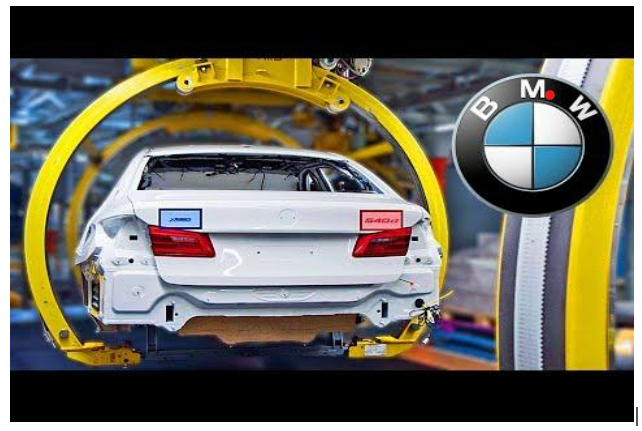
A great example comes from BMW’s manufacturing operations. BMW uses AI to monitor real-time production and equipment data across its lines, allowing it to flag potential faults or data anomalies for correction before they cause costly downtime or defects.
In practice, AI analyzes sensor signals and can automatically adjust schedules, redirect materials, or alert staff when something deviates from the norm. This early-warning system has had a dramatic impact on quality and uptime where, BMW reports up to a 60% reduction in vehicle defects thanks to AI-driven predictive detection and intervention rather than after-the-fact inspection. 

In short, BMW’s AI platform unifies maintenance and production data so effectively that maintenance can be performed proactively and quality issues are caught in their infancy, preventing production delays and scrap that would previously have halted production.

1.4 Workflows That Remove Coordination Overhead

In many plants, coordination is the invisible workload that consumes more time than the tasks themselves. Updates travel through emails, calls, and messaging apps. Reminders must be repeated and the status of critical tasks is often clear only to the last person who touched them.

Cognitive workflows eliminate this overhead. When any contributor completes their part of a process, the AI Agent updates automatically, informs the next stakeholder, and recalculates the overall plan if needed.This creates a self-synchronizing operation where work moves forward with minimal supervision, while helping leaders maintain clear oversight so nothing drifts out of view.

The gain is not just efficiency, it is peace of mind. Teams experience a quieter, more predictable rhythm where decisions come earlier, risks are seen sooner, and production stays on track without constant prompting.

Cognitive manufacturing is not a distant vision. It is the emerging standard for factories that want reliability, resilience, and agility without increasing managerial burden. By turning scattered information into clarity, AI enables leaders to focus on improvement rather than interpretation. And in doing so, it offers a new competitive advantage: a factory that can think as clearly as the people who run it.

For small and mid-sized American manufacturers, this shift has become a great equalizer. Unlike large enterprises, where layers of management slow down signal flow and SMBs can deploy cognitive workflows and see results almost immediately. 

Their size becomes an advantage: fewer silos, faster implementation, and a culture that adapts quickly to new tools. With AI handling coordination, SMB teams no longer waste hours reconciling spreadsheets or chasing updates. Instead, the entire operation behaves like a tightly integrated system, allowing them to outperform larger competitors that still rely on manual reporting cycles and outdated planning processes.

The impact is particularly strong in environments where complexity outpaces headcount. American SMBs often juggle high-mix production, short lead times, and frequent changeovers. Traditionally, this created stress points where planners  get overwhelmed by revisions, supervisors reacting to surprises, and operators waiting for instructions. Cognitive workflows remove this daily friction. Every deviation immediately updates the production schedule; every delay automatically triggers mitigation steps. The system becomes proactive, not reactive. This agility gives SMBs a responsiveness that enterprise factories struggle to match, allowing them to capture business that demands reliability and speed.

Nissco Welding (Colorado, USA) – Case Study 

Nissco Welding, a Colorado-based industrial fabrication SMB, faced the familiar coordination challenges seen in many small manufacturing operations: frequent order changes, reliance on paper-based travelers, and constant back-and-forth communication between welders, supervisors, and schedulers. 

These manual processes created delays, bottlenecks, and unnecessary cognitive load for a small team already stretched thin.

After implementing Tulip’s no-code manufacturing applications, Nissco digitized work instructions, automated task updates, and created real-time transparency across the shop floor. 

According to Tulip’s publicly shared customer story, this transition significantly streamlined communication and reduced the time employees spent tracking job status or seeking clarification. The team gained immediate visibility into work-in-progress, enabling faster handoffs and more predictable production flow.

Leaders at Nissco reported that replacing paper-based coordination with digital, automated workflows fundamentally changed how the shop operated. Tasks moved forward with fewer interruptions, supervisors made decisions sooner, and operators had clearer guidance by allowing the SMB to perform with the operational clarity typically associated with much larger manufacturers. Nissco’s experience highlights how cognitive-style workflows empower American SMBs to outmaneuver enterprise competitors slowed by legacy systems and organizational complexity.

Contributor:

Nishkam Batta

Nishkam Batta

Editor-in-Chief – HonestAI Magazine
AI consultant – GrayCyan AI Solutions

Nish specializes in helping mid-size American and Canadian companies assess AI gaps and build AI strategies to help accelerate AI adoption. He also helps developing custom AI solutions and models at GrayCyan. Nish runs a program for founders to validate their App ideas and go from concept to buzz-worthy launches with traction, reach, and ROI.

Contributor:

Nishkam Batta

Nishkam Batta
Editor-in-Chief - HonestAI Magazine AI consultant - GrayCyan AI Solutions

Nish specializes in helping mid-size American and Canadian companies assess AI gaps and build AI strategies to help accelerate AI adoption. He also helps developing custom AI solutions and models at GrayCyan. Nish runs a program for founders to validate their App ideas and go from concept to buzz-worthy launches with traction, reach, and ROI.

Unlock the Future of AI -
Free Download Inside.

Get instant access to HonestAI Magazine, packed with real-world insights, expert breakdowns, and actionable strategies to help you stay ahead in the AI revolution.

Download Edition 1 & Level Up Your AI Knowledge

Download Edition 2 & Level Up Your AI Knowledge

Download Edition 3 & Level Up Your AI Knowledge

Download Edition 4 & Level Up Your AI Knowledge

Download Edition 5 & Level Up Your AI Knowledge

Download Edition 6 & Level Up Your AI Knowledge

Download Edition 7 & Level Up Your AI Knowledge

Download Edition 8 & Level Up Your AI Knowledge

Download Edition 9 & Level Up Your AI Knowledge

Download Edition 10 & Level Up Your AI Knowledge

Download Edition 11 & Level Up Your AI Knowledge

Download Edition 12 & Level Up Your AI Knowledge

Scroll to Top