
Most factories don’t fail because engineers designs go wrong, they fail because the right people never see the right revision at the right time. It is like a silent killer inside manufacturing: outdated drawings hiding in email threads, production teams building from last month’s BOM, ECOs approved on paper but never reaching the floor.
Enterprises suffer from this more than anyone else.
Their size becomes their weakness as too many systems, too many steps, too many people chasing the same version of the truth.
But American SMBs? They’re breaking the cycle, and they’re doing it with the help of AI.
Where Enterprises Slow Down, SMBs Speed Up
In a thinking factory, AI acts as the revision guardian who is watching every drawing, part update, and BOM modification like a hawk.
What used to require PLM specialists, document controllers, and endless email chasing is now instant and automatic and is giving SMBs the operational sharpness enterprise once monopolized.
This is the shift no one saw coming: Where small manufacturers now execute Engineering Change Requests faster, cleaner, and with fewer errors than the giants they used to lose contracts to.
With HonestAI-GrayCyan, SMBs gain what enterprise can’t match:
AI-Driven ECR/ECO Advantages
- Zero outdated documents on the floor where AI replaces old files across ERP, MES, and workstations automatically.
- No waiting for approvals which changes the route, validate, and log themselves.
- Perfect compliance with every revision is tracked and auditable without human effort.
- Real-time production alerts which operators build only from the correct version, not the most convenient one.
The result? SMBs move with the precision of a Fortune 100 manufacturer without the overhead or bureaucracy.
Why SMBs Win With Automated ECR/ECO
While enterprise teams debate workflows and approval chains, SMBs using AI simply execute.
Measured advantages observed across U.S. SMB deployments:
- 30–45% fewer revision-related defects
- Up to 50% faster ECO cycle times
- $80K–$120K annual savings in scrap, rework, and admin overhead
- Almost zero engineering downtime spent hunting for files or correcting outdated builds
These aren’t theoretical gains, they’re operational leverage and leverage is how you beat a giant.
SMB Example — How a Small Midwest Fabricator Outperformed a Fortune-500 Competitor
A 45-person metal fabrication shop implemented GrayCyan after losing contracts due to repeated documentation and revision inconsistencies.
90 days after AI automation:
- Outdated drawing usage dropped from 12% → 0.7%
- ECO turnaround time shrank from 4.8 days → 2.2 days
- Revision-related scrap costs fell 38%
- On-time delivery improved by 17%
When bidding for a new automotive contract, the SMB beat a major enterprise supplier not on price, but on process reliability.
The customer’s feedback was simple: “Their engineering change accuracy was better than the large suppliers we typically rely on.”
A small shop won because their factory thought faster than the giant’s.
Automated ECR/ECO isn’t just about fixing mistakes — it’s about removing the friction that slows big companies down and giving SMBs the agility to win.
In 2026, American SMBs aren’t just competing with enterprise.
They’re outperforming them, one revision at a time.
What this unlocks:
- Zero outdated instructions: AI automatically replaces old drawings everywhere they hide through ERP folders, workstation tablets, and supplier packets.
- Instant compliance: Every ECO is timestamped, logged, and verified across stations without manual policing.
- Error-proof execution: Production is notified only when a change reaches a “ready-to-build” state, eliminating premature builds or skipped steps.
- Faster throughput: Teams no longer wait days for ECR approvals or revision validation.
Estimated Impact (based on blended manufacturing benchmarks):
- 30–45% reduction in rework caused by outdated documentation
- 2–4 hours saved per engineer weekly on manual file hunting
- Up to $80K/year saved for a 50-person engineering department on revision-related waste
Georgia-Pacific: AI for Maintenance & Quality Coordination

Georgia-Pacific, a major U.S. packaging and paper products manufacturer, has leveraged AI to unify knowledge across departments and spot issues early. They deployed an internal generative AI chatbot to centralize maintenance manuals, sensor data, and expert knowledge, making it easier for operators and engineers to get answers fast. This AI-driven visibility helps Georgia-Pacific in many ways, like :
- Perform Proactive Maintenance: By consolidating machine data and expert know-how, operators can troubleshoot and schedule fixes before breakdowns occur, minimizing unplanned downtime. The AI system captures subtle warning signs and past solutions, so maintenance can be coordinated with production schedules to avoid disruptions.
- Prevent Quality Defects: The chatbot gives real-time guidance on optimal machine settings and processes. As a result, Georgia-Pacific has reduced “off-quality” output (defects) by catching process drifts early and advising adjustments before a bad batch is produced. By surfacing these issues early, the quality team can intervene sooner, preventing defects from spreading through a whole production run.
Impact: Georgia-Pacific reports that this AI knowledge system boosted productivity and reduced downtime and scrap. It accelerated operator training, preserved expert knowledge, and ensured problems are addressed before they escalate.
AI gave the large manufacturer a unified, cross-department view of its operations, an issue through which many enterprises still struggle to achieve across siloed plants and delivered the kind of agility normally seen only in smaller but more adaptable American SMBs.
WestRock: AI-Powered Quality and Error Reduction

WestRock, a leading packaging manufacturer, uses AI in its factories to achieve cross-department visibility and early error detection. One significant focus area for WestRock is AI-driven quality control. By monitoring production data with machine learning algorithms, WestRock can ensure consistent quality and catch potential issues before they arise
. In practice, this means:
- Early Error Detection: AI systems at WestRock continuously analyze process parameters and outputs. They can flag anomalies for example, a data-entry error in a formulation or a machine setting that’s off, before it causes a material shortage or a batch-wide defect. This early warning allows teams (production, inventory, quality) to correct mistakes in real time.
- Coordinated Response: Because data from various departments (procurement, production, maintenance, quality) is connected, an issue in one area automatically alerts others. For instance, if a sensor predicts a machine will need maintenance sooner than scheduled, production plans are adjusted to fix it during a non-critical window, avoiding surprise downtime. Similarly, if a quality check flags a trend toward defect, the quality team is alerted immediately and can collaborate with operators to adjust the process before hundreds of units are affected.
Impact: This proactive, AI-enabled approach has improved WestRock’s reliability and customer service. By preventing breakdowns and defects, they avoid the costly delays that would have previously halted production and hurt customer relationships. As noted in their digital transformation reports, WestRock’s use of AI for quality management enhances product reliability and consistency by catching problems early and it is exactly the outcome your scenario describes.
Manufacturing teams often wait weeks for clear assembly instructions, leaving room for interpretation and error. AI transforms detailed engineering inputs into clear, human-friendly workflows instantly.
In most of the large enterprises, generating work instructions is a mini-project in itself. Consultants get hired. Documentation teams get involved. PDFs bounce between engineering, quality, and production for weeks.
By the time instructions finally reach the floor, the product has already changed and the instructions are outdated again.
This is where American SMBs are quietly pulling up ahead.
While enterprise are still writing instructions, SMBs are moving fast.
AI Makes SMBs Faster Than Enterprise Ever Was
A thinking factory doesn’t wait for someone to translate engineering language into something operators can use. AI handles the translation instantly.
HonestAI-GrayCyan analyzes everything that engineers creates like – CAD notes, tolerance callouts, datasheet excerpts, ECO revisions and turns them into clean, human-ready work instructions and visual workflows.
No jargons. No waiting for documentation of a staff which a small business doesn’t have.
And here’s the differentiator that enterprise teams envy: Instructions auto-update the moment engineering revises anything. There are no forgotten PDFs, no mismatched versions, no tribal knowledge gaps.
This isn’t “automation.” It’s operational clarity at a scale.
Why SMBs Are Winning Because of This
In the old world, documentation speed was an enterprise advantage.They had the people, the budget, the process.
In the 2026 AI world, documentation speed belongs to SMBs.
With AI-generated workflows, small American factories found :
Measured SMB Outcomes
- 60–80% faster instruction creation
- 90% fewer delays waiting for documentation
- 30–50% faster onboarding for new operators
- 10–18% reduction in defects because instructions are actually clear and always up to date
- Near-zero dependence on specialized technical writers or consultants
These are the kinds of gains enterprise systems promised for decades but never delivered because they were built for scale, not speed.
SMBs are winning because AI gives them both.
Enterprise Inspiration : How Boeing Sets the Standard for AI-Guided Assembly at Enterprise Scale

Industry: Aerospace
Employees: ~170,000
Boeing is one of the earliest large manufacturers to publish verified data on AI-assisted and AR-guided digital work instructions. These systems deliver step-by-step, context-aware instructions for wiring, electrical systems, and structural assembly.
- 75% reduction in training time for technicians learning new assembly tasks
- 40% improvement in First Pass Quality (FPQ) in electrical assembly
- 30% reduction in rework and corrective actions
- Significant reduction in assembly errors by replacing PDF/paper instructions with dynamic, AI-supported workflows
Why this matters
Boeing’s results prove that clarity and workflow intelligence directly raise quality in one of the world’s most safety-critical manufacturing environments.
Enterprise Inspiration: Toyota — AI-Driven Standardized Work and Precision Manufacturing
Industry: Automotive
Employees: ~370,000
Toyota implemented AI-supported AR work instructions to eliminate variation in complex engine and component assembly.

- 40% reduction in operator training time
- 20–30% reduction in assembly errors
- Faster onboarding for new operators due to guided, step-by-step digital workflows
- Higher standardization and repeatability across plants
Why this matters
Toyota demonstrated that even world-class Lean operations see major gains when instructions become intelligent, interactive, and adaptive.
Enterprise Inspiration: Siemens Electronics Works Amberg — Intelligent Execution at Global Scale
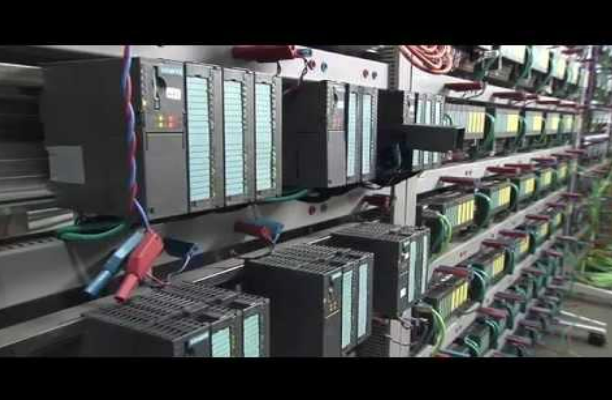
Industry: Electronics & Industrial Automation
Employees: ~1,300 at the Amberg facility
Siemens’ Amberg plant is widely regarded as one of the most advanced manufacturing facilities in the world. Digital work instructions, AI-augmented workflows, and automated quality loops form the core of its production system.
Results
- 99.9988% First Pass Yield, among the highest recorded globally
- Near-zero defects despite producing millions of product variants
- Extremely short training cycles due to interactive, digital guidance
- Real-time process corrections driven by connected systems and AI analytics
Why this matters
Siemens proves that AI-enhanced clarity, consistency, and feedback loops can outperform even far larger competitors.
The Takeaway
Enterprises have proven the value of disciplined documentation. SMBs are now applying the same principles with greater speed and flexibility.
By letting AI generate clear, revision-aware instructions instantly, SMBs remove the friction that slows their larger competitors down. When instructions update themselves and operators always know exactly what to do, speed becomes a natural byproduct, not a goal.
This is why SMBs are winning contracts they used to lose. This is why their defect rates are falling while their throughput climbs. This is why they are beating enterprise, not with size, but with clarity.