
Month-end close used to be a caffeine-fueled sprint held together by spreadsheets, late nights, and crossed fingers. For large enterprises, it still is. But SMBs have started shifting the workload to AI and the transformation is dramatic.
Instead of finance teams spending days collecting documents, reconciling numbers, and explaining variances, AI handles the heavy lifting automatically. It compiles every artifact that typically slows down the close:
- invoices
- PO totals
- goods-received notes (GRNs)
- card transactions
- freight bills
- payroll summaries
- general ledger entries
- expense receipts
AI ingests and organizes all this data instantly, compares it across systems, and identifies where numbers don’t align. When variances appear, the system drafts simple, human-readable explanations no accounting jargon, no unexplained figures, no time-consuming hunts for missing details.
Teams no longer ask, “Where did that number come from?” Instead, they see a clear narrative of what changed, why it changed, and what needs attention.
Real, Measurable Impact Across SMBs
AI-assisted month-end close doesn’t just reduce stress, it produces quantifiable operational improvements:
- 30–50% faster close cycles
- Controllers reclaim 12–15 hours per month
- 28% fewer reconciliation errors
- CFOs receive clean reports earlier — not “final-final-v4.xlsx”
The result is a finance function that runs on clarity, not chaos.
Enterprise Inspiration: How IBM Set the Benchmark for AI-Driven Financial Operations
 IBM is one of the world’s largest technology companies with over 270,000 employees, who faced a familiar finance challenge: a month-end close that was highly manual and time-consuming.
The process involved gathering data from multiple systems and performing extensive checks to minimize errors, especially during peak closing periods. This “chaotic close” required significant effort from finance analysts and even support from IBM’s consulting unit. Despite some early use of robotic process automation (RPA) to streamline parts of the workflow, the closing cycle remained long and error-prone.
Pain Points: IBM’s finance team struggled with a slow, fragmented close process.
Key challenges included:
- Manual Journal Entries: Financial analysts spent countless hours collecting data and posting journal entries by hand, increasing the risk of human error.
- Multiple Systems & Checks: Data came from disparate sources, requiring repetitive validations and reconciliations to ensure accuracy.
- Time Pressure: During month- and quarter-end peaks, closing the books took days or even weeks, creating a frantic, high-pressure environment for the team.
AI-Powered Solution Implementation at IBM
In 2024, IBM’s finance department launched an initiative (code-named “Jobotx”) to fundamentally reinvent the close process with artificial intelligence. Building on their RPA foundation, the team integrated IBM Watsonx Orchestrate (an AI-driven workflow automation tool) and IBM watsonx.ai models alongside their Apptio Enterprise Business Management system.
The solution introduced several AI and automation capabilities:
- Intelligent Journal Entry Automation: Using Watsonx Orchestrate (in tandem with RPA), IBM automated the preparation and posting of journal entries. The AI assistant was taught the manual steps of the process and could execute them autonomously – from validating inputs against the ledger to generating journal entry data for review. Upon a manager’s approval, the system would schedule and post entries to the general ledger, dramatically speeding up a once tedious task.
- AI-Driven Data Validation: The finance team trained custom AI models (via watsonx.ai) to perform root-cause analysis and anomaly detection on financial data. These models automatically flagged irregularities and validated data in real time, improving accuracy before final numbers were published. This reduced the need for last-minute error corrections and gave managers confidence in the results.
- Unified Dashboard & Workflow: IBM combined these AI tools with a dynamic dashboard (using IBM Business Automation Workflow) to monitor close activities. This provided real-time visibility into which tasks were completed, what variances were detected, and what still required attention – enabling a more controlled and transparent close process.
Illustration: AI tools have enabled finance teams to automate reconciliations, anomaly detection, and journal entries, transforming the month-end close from a laborious task into a streamlined, data-driven process.
Deployment: The AI-assisted closing solution was rolled out in early 2025 across IBM’s global finance operations. The implementation focused first on journal entry workflows – a major bottleneck – and then expanded to broader reconciliation and close tasks.
Crucially, IBM’s finance and technology teams iteratively refined the AI models and automation workflows to adapt to evolving financial policies and operational complexity..Throughout the process, controls were put in place so that AI recommendations (e.g. prepared entries or adjustments) always required human review and approval, ensuring governance and accuracy.
Results and Key Benefits
IBM’s adoption of AI for month-end closing yielded dramatic improvements in speed, accuracy, and efficiency. Within the first quarter of deployment, the finance team reported the following outcomes:
- 90% Faster Close Cycle: The end-to-end close and reconciliation process was projected to be cut by >90% in cycle time. What previously took days or weeks of frantic effort is now completed in a matter of hours. This near-real-time close capability means financial results are available much earlier, facilitating faster decision-making by leadership.
- $600K Annual Cost Savings: By automating manual work and reducing errors, IBM estimates about USD $600,000 in yearly savings on finance operations. These savings come from lower labor hours required, improved process efficiency, and less reliance on external support for the close.
- Improved Accuracy & Confidence: Automation and AI-driven anomaly detection have helped IBM reduce errors and inconsistencies in financial reporting by strengthening review and control processes, not by removing human oversight. The system continuously highlights unusual variances and patterns before final posting, allowing finance teams to investigate, validate, and resolve issues proactively. Rather than replacing judgment, AI serves as an early-warning and validation layer, ensuring potential risks are surfaced faster and more consistently than manual checks alone. Finance professionals remain responsible for review, interpretation, and final approval. This approach has improved the reliability of IBM’s financial reports and increased leadership confidence, including at the CFO level because numbers are no longer reviewed in isolation. They are reviewed with the support of systematic, repeatable AI checks and documented human validation. The result is a shift from reactive error correction to a controlled, audit able, and trustworthy close process—where accountability remains firmly with people.
- Freed Teams for Higher-Value Work: Because tedious tasks like data gathering, reconciliation, and entry posting are largely automated, IBM’s finance analysts have more time for strategic analysis and review. The team can focus on understanding the story behind the numbers rather than manually compiling them.
As IBM’s finance group explained, “by automating tedious work streams with WATS Orchestrate and leveraging AI insights, we free up our employees’ time to focus on more strategic work while also improving overall efficiency.”. This has boosted morale (no more burnout from late nights during close week) and enhanced the finance function’s value to the business.
A Predictable, Controlled Close Process
Overall, IBM transformed its month-end closing from a frantic, error-prone push into a predictable, controlled, and accurate process. Real-time dashboards and AI alerts have brought transparency to the close – at any moment, controllers and managers can see the status of each task and account.
If someone is out of office, others can easily pick up pending tasks because everything is centrally tracked and standardized (a stark contrast to the old spreadsheet-driven approach). The combination of AI-assisted analysis and structured human oversight has significantly reduced risk in the close process. IBM’s experience shows that, with the right technology foundation and disciplined change management, even a large and complex organization can achieve a faster, more reliable financial close.
Broader Industry Adoption: Other Big-Company Examples
IBM is not alone, there are many large enterprises who have been leveraging AI and automation to revolutionize their financial close, with notable success stories:
- Fortune 100 Pharma: Merck & Co. (known as MSD outside the U.S.), one of the world’s largest pharmaceutical companies, launched a finance transformation initiative to streamline its account-to-record (month-end close) process. A Fortune 100 pharma giant, Merck’s Global Business Services (GBS) team was tasked with implementing process improvements and automation to achieve approximately $2 million in annual cost savings. This effort focused on the month-end close cycle, where the team needed to understand how employees performed each task, identify inefficiencies, and find opportunities for intelligent automation. Merck’s GBS team deployed AI-based process mining (task mining) tools alongside generative AI (GenAI) to analyze user workflows and optimize the finance close process. By capturing how ~50 employees carried out close tasks, the team uncovered numerous redundant or unnecessary activities.
- Oracle Corporation: Oracle’s own finance team has been closing the books across a vast global enterprise and it has been reported that it shortened the monthly close by 20% through automation and cloud-based process improvements. This improvement, achieved even while teams were working remotely, underscores how adopting modern cloud ERP and AI-powered tools can speed up the close. Oracle’s initiative moved them closer to the goal of a touchless “continuous close,” where many tasks run in the background throughout the month, rather than piling up at month’s end.
These examples from IBM, Merck, Oracle, and others show that AI-assisted month-end closing is delivering real results at scale. Large organizations are seeing faster close cycles, fewer errors, cost savings, and happier finance teams. Importantly, CFOs gain more timely insights and confidence in the financials, rather than having to question the integrity of last-minute manual entries.
By embracing AI in the closing process, big companies can turn closing the books from a stressful sprint into a smooth, automated routine. The case of IBM’s finance transformation – alongside similar successes in other Fortune 500 firms, highlights a clear trend: AI and automation are redefining the finance close, making it possible to close books in days or hours with greater accuracy. This empowers CFOs and controllers to focus on strategic analysis and business decisions, confident that the financial foundation is solid and swift
What SMBs Can Learn from Enterprise Close Transformations
Large enterprises often require six to twelve months to roll out close automation due to complex system landscapes, integration requirements, and governance frameworks designed for scale and compliance. Those constraints are real and necessary at enterprise level.
SMBs, however, can apply the same principles with far less friction. With simpler environments and fewer legacy dependencies, they can introduce AI-assisted close workflows quickly and begin seeing benefits almost immediately, provided they adopt the discipline enterprises have already proven.
The key lesson isn’t speed alone. It’s focus. AI helps shift month-end from a high-pressure scramble to a structured, insight-driven process highlighting anomalies early, supporting human review, and reducing last-minute corrections. Faster closes, fewer errors, cleaner reporting, and greater leadership confidence follow naturally when the process is designed for clarity, not heroics.
In large manufacturing enterprises, entire teams exist to maintain compliance across finance, procurement, quality, and operations. SMB manufacturers rarely have that luxury, yet they face the same regulatory expectations from financial audits to quality certifications and supplier compliance.
AI now allows smaller manufacturers to apply enterprise-grade discipline without enterprise-scale overhead. Instead of relying on manual folder structures, inconsistent naming conventions, or last-minute document searches before an audit, AI continuously organizes and links records across both financial and operational workflows.
As transactions and production events occur, the system automatically captures and connects critical artifacts, including invoices, approval workflows, matching logs, vendor onboarding records, tax and compliance certificates, quality documentation, audit confirmations, and system activity logs. Each record is tied to the underlying event, whether it’s a supplier payment, a material receipt, or a production release.
The result is a living audit trail that stays up to date with manual effort. Every transaction and operational decision can be traced end-to-end, from supplier qualification and material approval through production and final payment. For manufacturers, this means audits become verification exercises rather than reconstruction efforts, freeing teams to focus on production, quality, and delivery instead of paperwork.
- invoices
- approval workflows
- matching logs
- vendor onboarding documents
- tax and compliance certifications
- audit confirmations
- change and activity logs
The result is a living audit trail that is continuously updated, fully traceable, and instantly accessible. Every transaction tells a complete story, from initial vendor creation to final payment, without the finance team lifting a finger.
Documented Results Across SMBs
AI-driven compliance automation produces measurable, repeatable improvements:
- Audit preparation time drops 50–70%
- Missing documentation approaches 0%
- Auditors request 30–40% fewer follow-ups
- Teams eliminate the stress and disruption of “audit-season panic”
As compliance becomes automated, finance teams spend less time chasing paperwork and more time focusing on operational performance and strategic outcomes.
Case Study: PwC’s AI-Enabled Audit Platform (Aura)
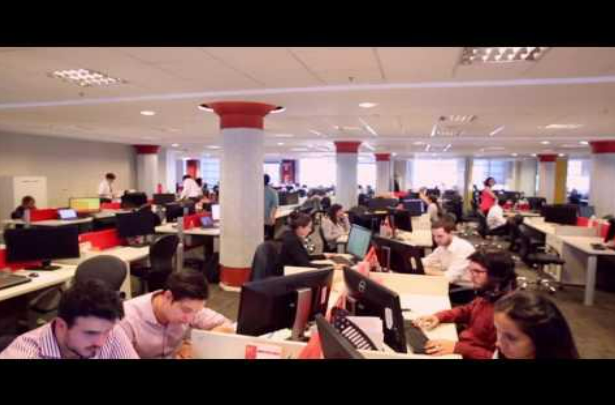
One of the most established real-world examples of AI improving audit quality and efficiency comes from PwC’s global audit automation initiative, which has deployed AI-enhanced tools across its worldwide audit practices. Rather than relying on traditional manual sampling and document review, PwC uses its Aura audit platform as an AI-assisted audit system used by auditors around the world.
With AI and automation embedded in audit workflows:
- Large volumes of financial data are analyzed consistently and rapidly, flagging anomalies and patterns that might escape human review.
- Audit procedures and documentation are standardized, ensuring quality and traceability across engagements.
- Real-time visibility into risk and compliance issues helps auditors prioritize efforts and reduce manual work.
While PwC’s implementation serves global enterprise clients, the underlying technology and benefits automated data extraction, continuous audit trail creation, and AI-guided risk detection are the same kinds of capabilities SMBs can deploy today with modern finance automation tools.
AI doesn’t just speed up audit tasks, it strengthens accuracy, accountability, and confidence in financial reporting by turning fragmented data into a coherent, continuously updated audit trail.
The New SMB Advantage in Manufacturing
For years, large manufacturers held an advantage in compliance because they could dedicate entire teams to documentation, audits, and quality records. Smaller manufacturers often relied on manual processes, not due to a lack of discipline, but lack of capacity.
AI has changed that dynamic. Today, manufacturing SMBs can deploy audit automation and compliance workflows in days rather than months, bringing structure to quality, supplier, and production records with far less overhead. Instead of assembling documentation after the fact, records are captured as work happens on the shop floor and across the supply chain.
This doesn’t mean SMBs are replacing enterprise practices, it means they are adopting them more efficiently. By embedding compliance directly into manufacturing workflows, SMBs achieve high levels of traceability, accuracy, and transparency without expanding headcount. The advantage is not scale, but speed: faster audits, clearer accountability, and more time focused on building products and meeting customer commitments.