
Most warehouses lose time not in picking, but finding: bins that moved without updates, items stored where they “should be” but aren’t, and kits built with partial information. AI fixes this by continuously comparing scan activity with ERP changes and highlighting location mismatches before they create delays.
AI eliminates this chaos by acting as a real-time validation layer across the warehouse floor. It continuously cross-checks scan activity, bin movements, picker behavior, and ERP updates to spot mismatches immediately before they cascade into delayed orders, overtime costs, or kitting rework.
Core Capabilities Delivering Operational Gains
1. Live Location Accuracy Tracking
In most factories, especially enterprise environments, inventory data becomes stale within hours. Bin assignments drift, operators move material temporarily and forget to update locations, and ERP records become unreliable. SMBs traditionally struggled even more because they lacked the staff to constantly reconcile physical and digital inventory.
Live Location Accuracy Tracking changes that dynamic completely.
AI continuously reconciles:
- scanner logs
- operator movements
- ERP bin assignments
- timing patterns
every few minutes, not once per shift.
The moment a part is placed in the wrong bin, moved without authorization, or scanned to the incorrect location, the system flags it instantly. Instead of operators losing 10–20 minutes searching for a part, the issue is resolved before it becomes a disruption.
Why this shows SMBs are beating enterprise:
Large enterprises depend on cycle counts, audits, and large teams to maintain accuracy. SMBs don’t have that luxury, so AI gives them something better: real-time truth.
This immediate visibility allows a 200-person SMB to operate with the inventory precision of a Fortune 500 manufacturer, eliminating the costly delays and search times that large plants often normalize.
2. Automated Kitting Validation
Kitting errors are among the silent killers of manufacturing efficiency. Wrong revisions, missing components, expired batches, or unauthorized substitutes stop production instantly. In many enterprise systems, validation is still manual or semi-manual, buried inside spreadsheets or reliant on tribal knowledge.
AI-driven Automated Kitting Validation eliminates the risk entirely by checking, in real time:
- BOM revisions
- approved substitutes
- batch + lot constraints
- availability at each step
- reservations vs. free stock
- engineering updates
The AI compares what should be in the kit to what is in the kit—and flags discrepancies immediately. SMBs using this type of validation routinely cut incomplete or incorrect kits by 35–60%, depending on SKU complexity.
Why this shows SMBs are beating enterprise:
Enterprise companies have teams of planners, analysts, and expediters dedicated to correcting kit errors after the fact. SMBs, with leaner teams, can’t afford rework cycles or constant firefighting.
This AI capability removes the burden entirely, giving SMBs an accuracy level that enterprise plants often fail to reach—even with larger budgets and staff.
3. Predictive Location Drift Alerts
Inventory drift usually starts small: a pallet moved “temporarily,” a bin mislabeled during a rush shift, a material handler placing items in an alternate slot. Enterprises try to control this with rigid systems and slow audit cycles, but drift still compounds because nobody sees it early enough.
AI models historic behavior based on:
- pick-frequency patterns
- operator movement trends
- high-risk SKUs
- congestion zones
- seasonality
- substitution tendencies
Then it predicts which items are most likely to wander next.
Teams can audit proactively, long before the item becomes “missing.”
This cuts mis-slotting incidents by 40%+ which is a great massive operational win.
Why this shows SMBs are beating enterprise:
Enterprise companies often require large teams just to maintain slotting accuracy. SMBs without the headcount which use AI to get ahead of errors instead of reacting to them.
This predictive capability lets an SMB operate with world-class control, moving with agility and precision that most large organizations simply cannot match due to organizational drag.
4. Cost Impact Modeling
In many organizations, especially at enterprise scale, inventory discrepancies get dismissed as “normal.” The impact is hidden across multiple departments:
- lost picker minutes
- rework hours
- utilization loss
- machine downtime risk
- WIP starvation
- expedited shipping costs
- schedule ripple effects
AI changes the conversation by turning every discrepancy into real dollars.
Instead of debating whether an error is important, the system quantifies:
- how much time it cost
- how much overtime it created
- how much production risk it introduced
- how much margin it eroded
Operations leaders finally gain hard financial justification for process changes that previously relied on gut feel.
Why this shows SMBs are beating enterprise:
This is where SMBs gain an enormous competitive edge. Enterprise organizations often struggle to move quickly because decisions require layers of approval and cost analysis. SMBs which are powered by automated cost modeling can justify and implement improvements immediately. Speed is the ultimate competitive advantage, and SMBs move faster when they have clear financial signals.
Final Summary: How These Capabilities Prove SMBs Are Outperforming Enterprise
Enterprise manufacturers have size, resources, and global systems, but they also suffer from slow decision-making, layered approvals, and operational inertia. SMBs don’t have those constraints. With AI handling visibility, validation, detection, and cost modeling, SMBs gain the precision of enterprise systems AND the agility of a smaller organization.
That combination is unbeatable.
AI doesn’t just close the gap— it lets American SMBs sprint ahead.
Real-World Example: Mid-Size Electronics Manufacturer
Industry research consistently shows that inventory location inaccuracies create major bottlenecks on the warehouse floor. A widely cited Apexon analysis found that inventory inaccuracies account for nearly 25% of overall warehouse productivity loss, and separate audits reported inventory record accuracy as low as 60% in many facilities, despite ERP systems indicating much higher accuracy.
According to a Smart Warehousing report, misplaced or mis-slotted items are one of the top five causes of warehouse delays, often leading to significant increases in search and travel time as workers attempt to locate parts that are recorded as available but not physically present where expected. This discrepancy between ERP data and reality directly slows kitting, extends pick paths, and increases operational cost.
AI Implementation & Outcomes
Detailed explanation of each bullet point based on industry research and real-world benchmarks
1. Inventory accuracy rises to 95–99% with AI-driven visibility and automated scanning
When organizations integrate AI-powered material visibility systems with technologies such as RFID, computer vision, machine learning based reconciliation, and automated barcode validation, inventory accuracy consistently approaches 95–99%.
McKinsey’s warehouse digitization studies show that AI reduces the historical sources of inaccuracy such as manual miscounts, undocumented moves, and delayed updates to enterprise systems.
AI models continuously compare system stock levels with real-world floor conditions, automatically flag suspicious discrepancies, and trigger corrective actions without human intervention. Over time, this creates a self-correcting inventory ecosystem, replacing periodic counts with continuous validation.
2. Picking efficiency increases by 25–40% with AI-optimized slotting, routing, and corrective logic
Research from DHL Supply Chain highlights that applying AI to pick-path optimization, dynamic slotting, and real-time route adjustments leads to a 25–40% improvement in picking efficiency. AI evaluates SKU movement patterns, seasonality, and order frequency to position items more strategically and adapt to changing conditions.
Additionally, AI adjusts pick routes in real time based on congestion, priority orders, and newly detected stock shifts. This eliminates wasted travel time and ensures that associates always receive the most efficient path, even in highly dynamic warehouse environments.
3. Search time and travel time reductions of 20–30% after eliminating mis-slotted items
Benchmarking studies from MHI and WERC reveal that AI-driven location validation can reduce search-related delays by 20–30%. Mis-slotted items, a major cause of lost time are detected automatically through computer vision scans, anomaly detection models, and frequent micro-validations.
With precise item-location mapping, workers no longer spend time searching for misplaced materials or verifying incorrect bin assignments. As a result, both floor productivity and overall fulfillment speed improve significantly.
4. Out-of-stock and missing-part disruptions fall by 30–50% through continuous ERP-floor reconciliation
According to Gartner’s supply chain digitization insights, AI can reduce stockouts and missing-part events by 30–50% by creating a real-time feedback loop between ERP data and physical warehouse inventory.
The AI system continuously validates whether the ERP reflects actual on-hand inventory, detecting discrepancies such as phantom stock, unrecorded consumption, or unposted put-aways. This early detection prevents shortages from propagating into production delays, order cancellations, or emergency expediting costs.
5. Labor cost reductions of 10–20% with real-time discrepancy detection and workflow automation
McKinsey reports that organizations implementing AI-based discrepancy detection can reduce labor costs by 10–20%, primarily by cutting down on:
- Manual cycle counting
- Rework caused by incorrect picks
- Time-consuming discrepancy investigations
- Supervisory oversight
- Administrative inventory reconciliation tasks
AI automatically identifies and resolves inconsistencies before they become operational issues, reducing the need for secondary verification and exception handling. This shifts labor from correction-based tasks toward higher-value operational activities.
6. Locus Robotics case: 2–3× increase in throughput from AI-guided pick sequencing
Locus Robotics founded by Bruce Welty and Rick Faulk provides one of the strongest real-world examples of AI-driven warehouse productivity gains. In multiple U.S. distribution centres, the deployment of AI-enabled autonomous mobile robots (AMRs) resulted in a 2–3× increase in warehouse throughput.
Key outcomes from their customer deployments include:
- Dynamic, AI-generated pick sequences that adapt to real-time stock positions
- Continuous optimization of worker–robot collaboration
- Reduction in walking distances and idle time
- Autonomous correction of routing inefficiencies
Unlike traditional warehouses that rely on static pick maps, Locus’ AI continuously recalculates the optimal path based on current inventory visibility, work-in-progress data, and robot availability — making picking faster, more accurate, and more predictable.

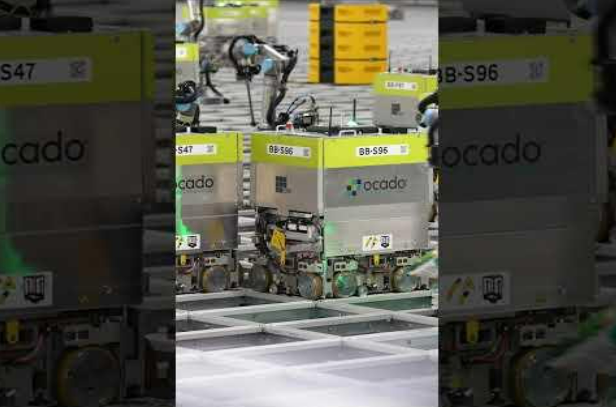
- Ocado, led by founder Tim Steiner, uses AI-driven bin and tote location optimization in its automated fulfillment centres, improving accuracy and maintaining near-perfect digital-to-physical alignment.
Result for operators
Pickers stop hunting. Kits assemble faster. Walking drops dramatically. Stock stays true to the system reality.
Receiving has traditionally been one of the slowest, most error-prone processes: matching PO’s to packing lists, generating GRNs, printing labels, and verifying quantities. AI now reads these documents the moment they arrive, highlights mismatches, drafts GRNs, and prepares labels automatically.
Modern vision AI and document-understanding systems instantly read supplier documents the moment they arrive—PDFs, emails, scanned shipments, even handwritten notes. They detect mismatches, flag discrepancies, auto-generate GRNs, and prepare labels before the shipment is even moved to the dock.
How AI Improves Receiving
- Automatically extracts PO numbers, SKU codes, batch details, and quantities with >99% OCR accuracy
- Highlights mismatches between PO, ASN, and packing list—before unloading starts
- Generates draft GRNs and routes exceptions for approval
- Creates labels automatically and sends them to print on arrival
- Integrates with WMS/ERP to update inventory in real time
- Reduces handling time, labour involvement, and error rates
Operational Impact
Companies using AI-powered receiving typically report:
- 40–65% faster receiving cycles
- Up to 80% reduction in manual data entry
- 20–30% lower labour costs for receiving teams
- Near-zero quantity errors, improving downstream pick accuracy
- 30–50% faster dispute resolution with suppliers due to instant discrepancy flags
For a mid-sized distribution centre processing 5,000 inbound lines per week, automation typically saves approx $18K–$35K/month in labour, paperwork, and error-related costs.
Real-World Inspiration: Flexport’s AI-Driven Document Intelligence
Flexport, founded by Ryan Petersen, built one of the logistics industry’s most advanced AI and OCR pipelines to handle millions of global freight documents.
Key Features of the Case Study
Here are the elements that are publicly verified by Flexport:
- Handles millions of logistics documents annually
- Uses machine learning + OCR to extract structured data
- AI is used to match documents to shipments and detect discrepancies
- Processes more than 20 types of common freight documents
- Automates classification of documents into dozens of categories using ML models
- Reduced manual document processing workload for internal teams
- Reduces delays related to customs and compliance by improving document accuracy
- Flexport has raised over $2B in funding from investors including Founders Fund, Google, SoftBank, and Andreessen Horowitz.
- Operates across 112+ countries through global logistics partners.
Ships more than $19B worth of goods annually (per Flexport’s official stats).
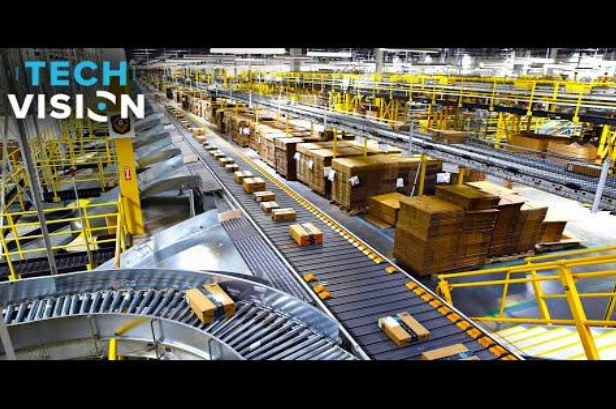
 Amazon’s inbound logistics teams use AI-driven verification to accelerate check-ins, reducing receiving times by double digits and catching mismatched shipments faster.
Why This Matters
Flexport demonstrates what happens when AI sits at the core of receiving and validation processes. Instead of clerks manually reconciling documents, the system:
- highlights errors instantly
- eliminates redundant human review
- ensures data accuracy across all supply chain partners
- accelerates the entire inbound logistics cycle
Many mid-market warehousing operations are now adopting similar AI-drive workflows without requiring Flexport-level scale or investment.
Result for operators
Less cross-checking. Fewer errors. Receiving shifts from a bottleneck to a competitive advantage.
The dock stops slowing you down, it starts setting the pace.
Cycle counting represents a low-value, highly repetitive activity that diverts skilled labor from more productive work, which bin is wrong? What should we count first? Why is this SKU always off? AI helps us by analyzing simple operational signals through scanning time differences, repeated adjustments, returned goods, unposted movements and predicting which bins are most likely inaccurate.
Teams count the highest-risk areas first instead of spreading effort evenly across all locations.
Real-World Inspiration from the Big Enterprise
- Walmart, under the digital leadership inspired by former CTO Suresh Kumar, deployed machine learning to predict high-risk inventory locations. This reduced physical counting workloads and led to measurable improvements in on-hand accuracy.
Zara (Inditex) Zara (Inditex) achieved significant gains in inventory visibility and stock accuracy following the deployment of RFID technology across its stores and distribution centres. With every item tagged, store teams can now perform full inventory counts in a fraction of the time it previously took with barcode scanning. This shift dramatically increased the frequency and reliability of stock checks, reduced manual errors, and gave Zara near–real-time insight into item-level availability. RFID also enabled more accurate replenishment and faster identification of missing or misplaced items, strengthening overall stock control and improving on-shelf availability — a key driver of Zara’s fast-fashion model.

Freight reconciliation is one of the most universally disliked tasks in operations. Which involves dozens of invoices, endless PDFs and charges that never match your expectations.
AI organizes the chaos by making logistics data clear and transparent, empowered by human oversight and expertise. Every tracking update, shipment milestone, bill of lading, and carrier message is captured and compared against what was planned. When something drifts like – an ETA change, a missing scan, a delivery posted at the wrong time, or a mismatch between freight charges and shipment details , the system surfaces it immediately in plain, understandable language.
Instead of discovering problems when a line goes down or invoices don’t reconcile, teams know exactly where each shipment stands and what needs attention. Freight discrepancies are caught early. Tracking gaps are no longer invisible. Reconciliation becomes a quick confirmation, not a research project.
Business result: Lower freight spend, faster reconciliation, and zero time wasted chasing mismatched charges.
This is what logistics looks like when AI removes busywork and restores control.
Material movement inside warehouses is often shaped by habits, not data. Workers follow paths that feel familiar, not optimal. AI analyzes simple movement logs, repeated pick sequences, WIP shortages, and congestion points to recommend smarter bin placements and layout adjustments.
Sometimes the biggest efficiency wins come from the smallest relocation.
By analyzing simple activity logs by picking sequences, forklift routes, worker travel heatmaps, WIP shortages, restock delays, and congestion timestamps where AI identifies inefficiencies invisible to the human eye. The system then recommends precise bin relocations, aisle rebalancing, SKU re-slotting, or even micro-layout changes that reduce total travel time and eliminate bottlenecks.
These adjustments often look deceptively small: shifting a fast-moving SKU to the end of an aisle, clustering commonly paired parts, or reducing walk distance between top-five pick combinations. But the impact compounds across thousands of daily movements, driving major labor and throughput gains without adding headcount or equipment.
Key Capabilities
- Heatmap-based congestion detection: Identifies recurring slow zones and recommends path optimization.
- SKU pairing analysis: Finds items frequently picked together and positions them strategically.
- Travel-time optimization: Predicts the lowest-cost arrangement of bins to minimize worker travel.
- WIP flow forecasting: Prevents inter-stage shortages by adjusting bin locations dynamically.
- Continuous re-slotting suggestions: Automated recommendations triggered by seasonality, demand spikes, and new product introductions.
- Cost-impact modeling: Each recommended change shows expected labor savings, travel-time reduction, and annualized ROI.
Real-World Inspiration
Symbotic, the AI-powered robotics company backed by entrepreneur Rick Cohen, optimizes warehouse layouts using data from movement patterns, dramatically improving throughput for partners like Walmart and Target.
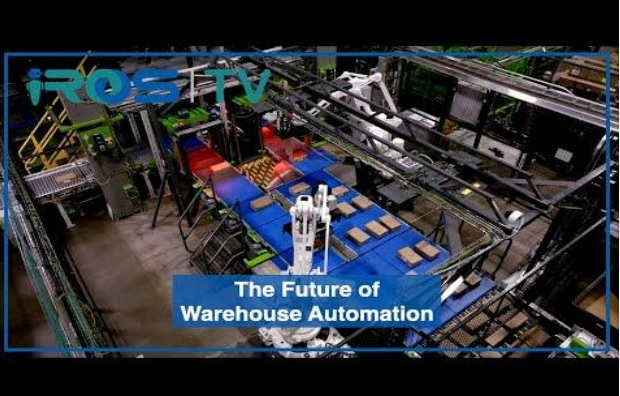
- Kiva Systems (acquired by Amazon; founded by Mick Mountz) revolutionized layout fluidity by using AI to constantly reposition inventory based on real-time demand cutting walking time to nearly zero.
Result for operators
Shorter routes. Lower fatigue. Faster picks. A warehouse layout that evolves with your business, not against it. Smart warehouses aren’t built with robots or sensors alone.
In 2026, material doesn’t just move. It moves intelligently, transparently, and in sync with every part of the factory that thinks.
Result for operators
Fewer surprises. Fewer stock discrepancies. More trust in the numbers that drive planning.